
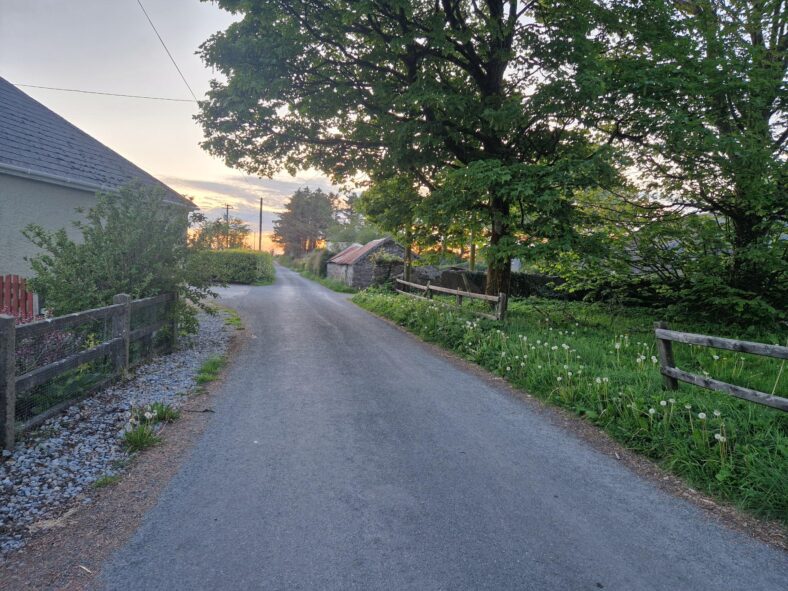
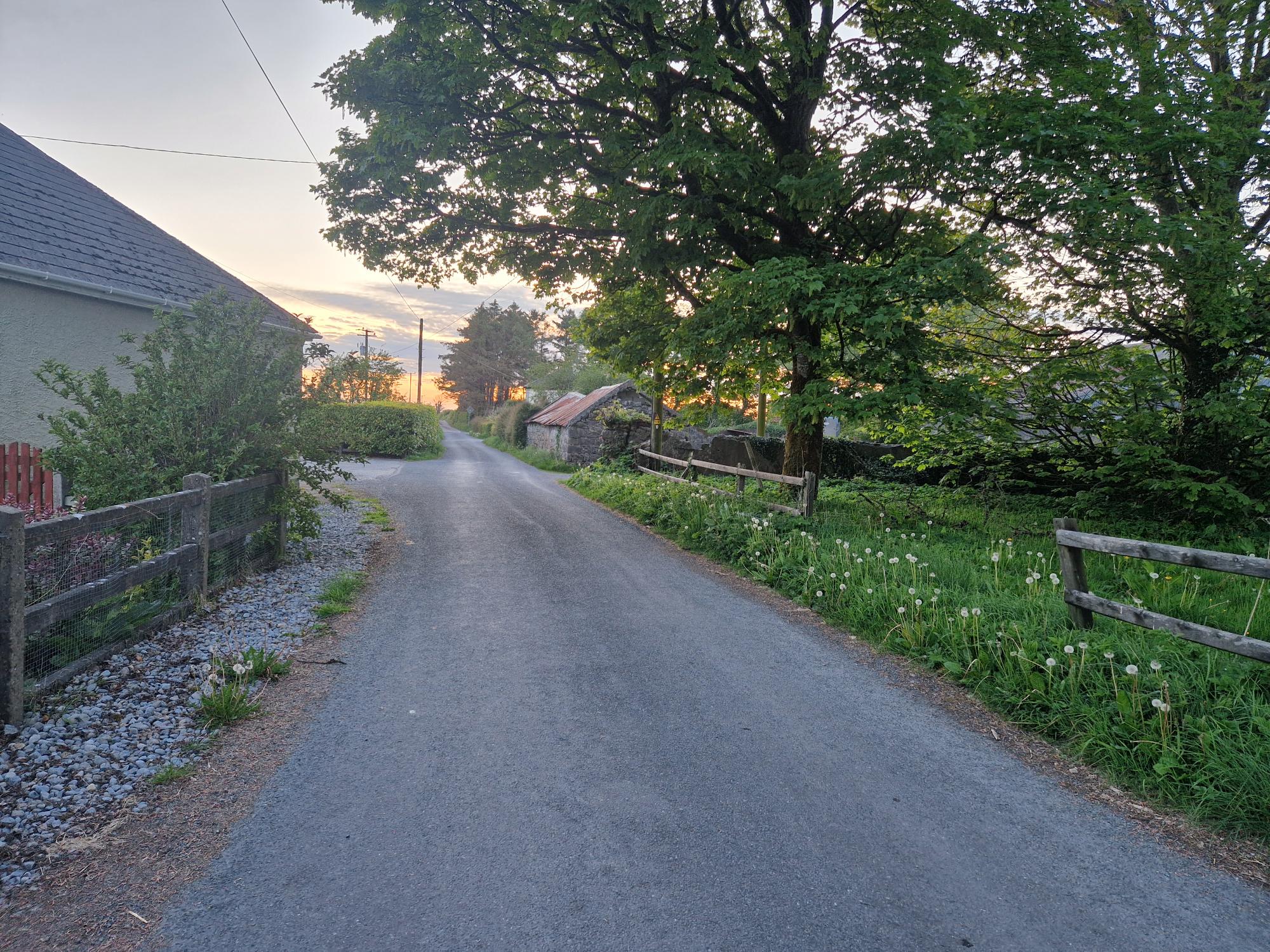
Baile an Gheata – Town of the gate
Situated on the centre of the E. boundary of the Parish. It is bounded N. by the townland of Patch, E. by Castlebellew, S. by the Parish of Killoscobe, N. by Mullaghmore East, and a Lake.
Michael D. Bellew, Esq. Proprietor. This townland contains 137¼ acres, 101 of which are cultivated, 29 uncultivated, 1 water. No lease. Is let at the yearly rent £1. 1s. p. acre. County Cess pay for 40 acres 1s. 2¼d. half yearly. The soil is heavy clay. Produce potatoes, oats and flax. No minerals. There is part of Loughelarsagh.
The total area of land and property in Ballingatta was 276 acres and 22 perches and the total annual valuation of rateable property was £72-12-0
All land and property in Ballingatta was owned by Sir Christopher Bellew Bt.
Patrick Healy rented two separate areas of land, along with a house and out-offices. The first parcel he rented spanned 12 acres, 1 rood, and 37 perches, for which he paid £7-10-0. The second area, which included his house and buildings, totalled 7 acres, 2 roods, and 17 perches, costing £6-0-0—bringing his total rent to £13-10-0.
Owen Glynn also rented two separate areas of land. The first parcel spanned 3 acres, 3 roods, and 12 perches, costing £2-5-0. The second, which contained a house and out-offices, covered 19 acres and 27 perches, with a rent of £14-10-0.
Catherine Naughten rented only a house from Sir Christopher Bellew Bt., paying £0-4-0.
Michael Hughes rented two separate parcels of land. The first measured 4 acres and 17 perches, costing £2-15-0. The second, which contained a house, spanned 3 roods and 20 perches, costing £0-15-0—bringing his total rent to £3-10-0.
Catherine Hughes rented two areas of land, one of which included a house. The first parcel spanned 1 acre and 16 perches, costing £0-15-0. The second, where her house was located, covered 1 acre and 11 perches, costing £1-0-0 totalling £1-15-0.
John Healy leased only a house from Sir Christopher Bellew Bt., at a cost of £0-4-0.
William Cooneagh leased a house and land spanning 3 roods and 20 perches, with the land costing £0-10-0 and the house £0-5-0, for a total of £0-15-0.
Peter Geraghty leased 80 acres, 2 roods, and 14 perches from Sir Christopher Bellew Bt., paying £35-0-0.
Thomas Cahill rented land with a house, covering 3 acres, 2 roods, and 3 perches. He paid £1-15-0 for the land and £1-10-0 for the house, totalling £3-5-0.
Sir Christopher Bellew Bt. owned land in fee, which included a plantation of 2 acres, 1 rood, and 20 perches, valued at £0-5-0, as well as a body of water spanning 7 acres, 1 rood, and 10 perches.
There were 5 households and 19 individuals in Ballingatta at the time of the census in 1901, 9 males and 10 females with an average age of 31. All occupants of Ballingatta were Roman Catholic, and all houses were made from non-perishable material likely stone, brick or concrete, Patrick Kenny owned the only house with a non-perishable roof in the area. The heads of the households were Bridget Connor, Elizabeth Glynn, John Healy, Thomas Lyons and Patrick Kenny; these households had 15 Out-offices connected to them consisting of 2 stables, 3 cow houses, 2 piggeries, 3 fowl houses, 2 barns, 2 sheds and 1 potato house.
Bridget Connor (75) was a widowed labourer who lived with her granddaughter Ellen Gilmore (9), who was a scholar. Bridget couldn’t read, but Ellen could read and write. They were both Roman Catholic and born in County Galway. Bridget could speak Irish and English. They lived in a 3rd-grade house with 2 rooms and no front windows. The walls were made of non-perishable material such as stone, brick, or concrete, and the roof was made of wood or thatch. The house was owned by William Glynn. They had 1 out-office, which was a fowl house.
Elizabeth Glynn (70) was a widowed farmer who lived with her son Owen (35), who was a farmer’s son, and 2 farm servants, Naon Patrick (40) and John Barrett (16). They were all Roman Catholic. Naon was the only person who couldn’t read or write. They all spoke Irish. They lived in a 2nd-grade house with 4 front windows and 2 rooms. The walls were made of non-perishable material such as stone, brick, or concrete, and the roof was made of wood or thatch. The house was owned by William Glynn and had 8 out-offices, consisting of 2 stables, a cow house, a piggery, a fowl house, a barn, a potato house, and a shed.
John Healy (55) was a farmer who lived with his wife Catherine (40), his son Patrick (13), who was a scholar, and his sister Catherine (50), whose occupation was a farmer’s sister. They were all Roman Catholic. John and Catherine (John’s wife) could read, Patrick could read and write, and Catherine (John’s sister) couldn’t read or write. Patrick was the only person who couldn’t speak Irish. They lived in a 2nd-grade house with 3 front windows and 2 rooms. The walls were made of non-perishable material such as stone, brick, or concrete, and the roof was made of wood or thatch. The family had 1 out-office, which was a fowl house.
Thomas Lyons (40) was a farmer who lived with his wife Ellen (39), their 2 daughters, Mary (14) and Bridget (7), and their son Michael (11), all of whom were scholars. The family also lived with Thomas’s brother-in-law, Michael Healy (27), who was a farmer. They were all Roman Catholic and could all read and write. Thomas, Ellen, and Michael Healy could speak Irish. They lived in a 2nd-grade house with 3 front windows and 2 rooms. The walls were made of non-perishable material, likely stone, brick, or concrete, and the roof was made of perishable wood or thatch. The family had 5 out-offices, which included a stable, a cow house, a piggery, a barn, and a shed.
Patrick Kenny (62) was a farmer who lived with his wife Bessie (50), who was a housekeeper, and their 4 daughters, Lucy B (15), Maggie T (14), Sarah (10), and Alice (8), who were all scholars. They were all Roman Catholic and could all read and write. None of them spoke Irish. Patrick was born in County Leitrim, and Bessie was born in County Longford. All of the daughters were born in County Galway. The family lived in a 3rd-grade house with 1 front window and 2 rooms. The walls were made of non-perishable material such as stone, brick, or concrete, and the roof was made of slate, iron, or tiles.
Ballingatta had 4 households and 13 individuals 1911, 6 male and 7 female with an average age of 37. All occupants of Ballingatta were Roman Catholic, Elizabeth Kenny was the only individual born outside of County Galway (Longford). All of the houses were made from stone. The heads of each household were, Owen Glynn, John Healy, Elizabeth Kenny and Thomas Lyons. There were 15 out-offices that were connected to these households; overall 4 cow houses, 4 stables, 2 piggeries, 2 fowl houses, 2 barns, and 1 cart house.
Owen Glynn (56), a farmer, lived with his wife, Mary Josephine (40). They were both Roman Catholic and born in County Galway. They could both read and write, but only Mary Josephine could speak Irish. They lived in a 2nd-grade, 2-room house with 4 front windows. The walls of the house were made of stone, brick, or concrete, while the roof was made of perishable materials, likely wood or thatch. They had 5 out-offices: a stable, a cow house, a piggery, a fowl house, and a barn.
John Healy (72), a widower farmer, lived with his sister, Catherine, and John’s son, Patrick, who was also a farmer. They were all Roman Catholic and were all born in County Galway. Catherine couldn’t read or write, while John could read only, and Patrick could do both. Catherine and John could speak Irish. They lived in a 2nd-class, 2-room house with 3 front windows. Their walls were made of non-perishable materials, such as stone, brick, or concrete, while their roof was perishable, likely made of wood or thatch. They had 2 out-offices: a stable and a cow house.
Elizabeth Kenny (59), a widowed farmer, lived with just her daughter, Alice (19). Both were Roman Catholic and could read and write; however, only Alice could speak Irish. Elizabeth was born in County Longford. They lived in a 2nd-grade house with 3 front windows and 2 rooms. Their walls were made of non-perishable materials, such as stone, concrete, or brick, and their roof was made of non-perishable materials, likely slate, iron, or tile. They had 2 out-offices: a cow house and a fowl house.
Thomas Lyons (55), a farmer, lived with his wife, Ellen (47); their 2 sons, Michael (20) and Martin (6), who was a scholar; their daughter, Bridget (16); and Thomas’s cousin, Beesey (20). They were all Roman Catholic and could all read and write; however, only Thomas and Ellen could speak Irish. They lived in a 2nd-grade, 3-front-windowed home with 2 rooms. Thomas owned this property, which had 6 out-offices: 2 stables, a cow house, a piggery, a barn, and a cart house.
No Comments
Add a comment about this page