
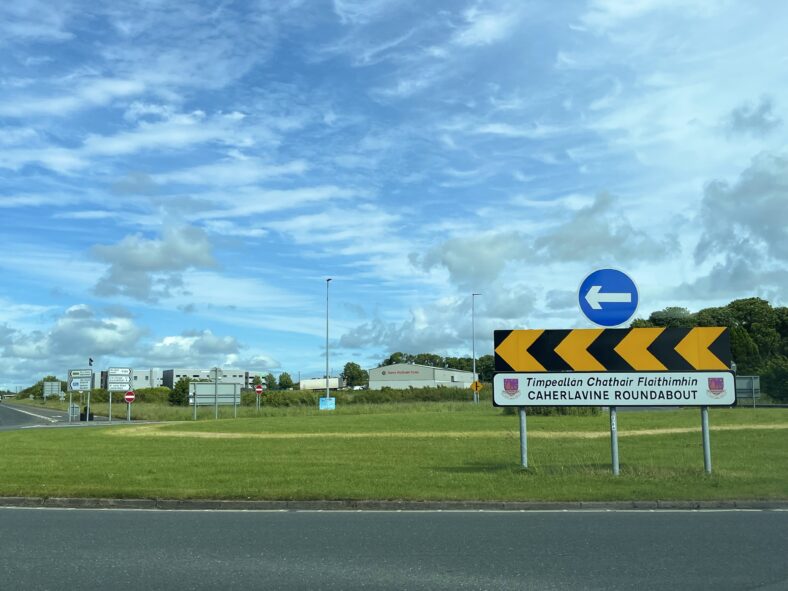
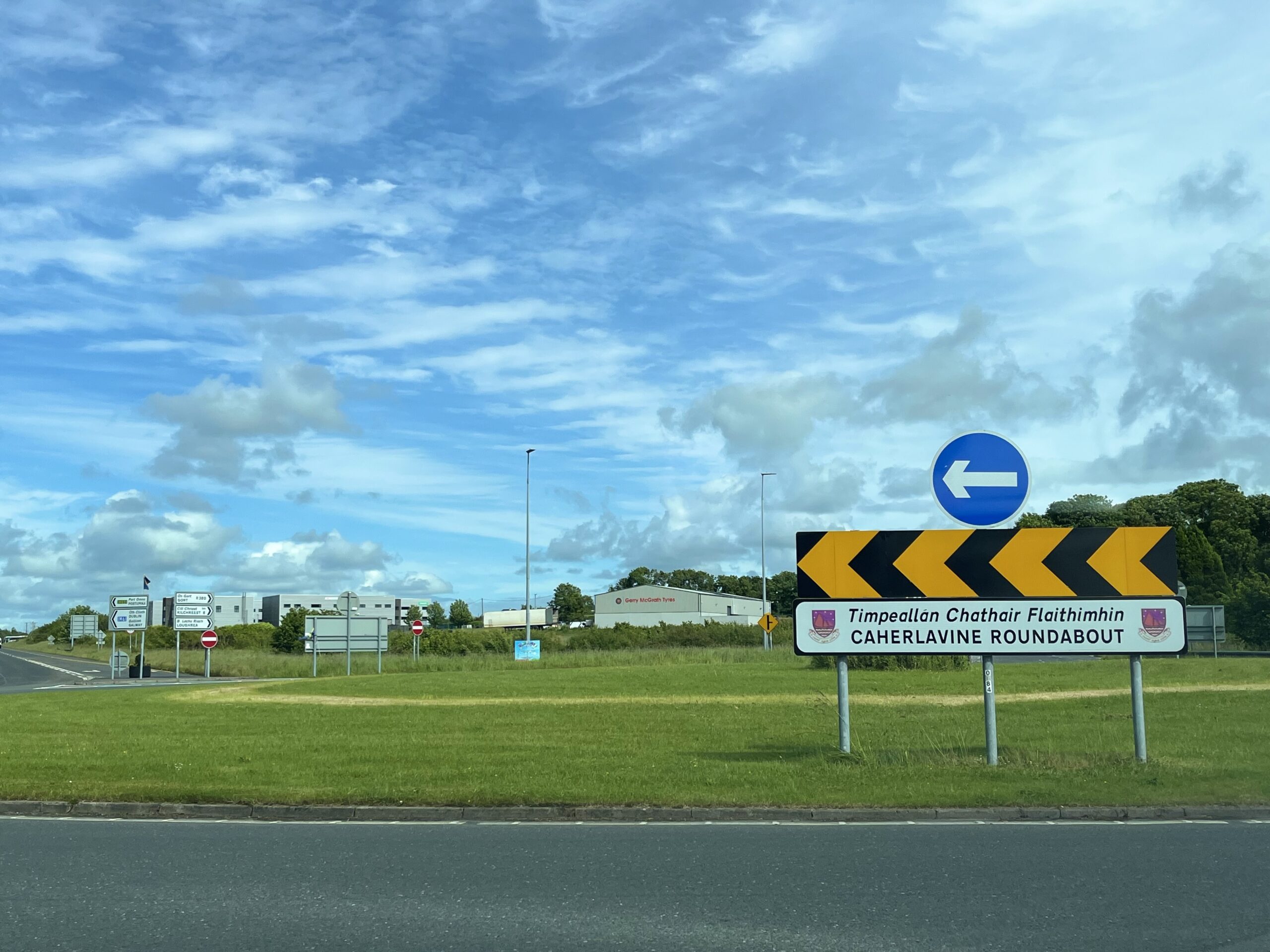
Caherlavine
County: Galway
Barony: Loughrea
Municipal District: Loughrea
Civil Parish: Loughrea
Roman Catholic Parish: Loughrea (St. Brendan’s)
District Electoral Division: Loughrea Town/Loughrea Rural (1901), Loughrea Urban/Loughrea Rural (1911),
Area (Loughrea Urban): 33.29 acres (33 acres, 1 rood, 7 perches), according to Townlands.ie
Area (Loughrea Rural): 159.72 acres (159 acres, 2 roods, 34 perches), according to Townlands.ie
OS Map (Larkin, 1819): Available here
OS Map (6″ OS, 1840): Available here
Irish Form Of Name: According to Logainm, the Irish form of the name for Caherlavine is ‘Cathair Fhlaithimhín’, although there is no translation given. According to O’Donovan’s Field Name Books, the Irish form of the name is ‘Cathair Lanntín’, meaning ‘Lavine’s Stone Fort.’
O’Donovan’s Field Name Books
Description: ‘It is a long and narrow townland. All arable […] It contains a small village, but no antiquities. Proprietor Earl of Clanricarde. Rent per acre 16d to £1. County Cess 1s. 5d. Half yearly.’
Situation: ‘N. Western part of the parish, is bounded by the townland of Cahern [Cahernagormuck / Caherlavine], Tulla [Tullagh] (Lower), Pooularoebuck [Pollroebuck], St. Laurence’s Fields and Gorteenahobogg [Gorteennabohogy] in this parish and by Ardnadooman [Ardnadoman] East in that of Kilconickny.’
Griffith’s Valuation (1847-1864) For Caherlavine
According to Griffith’s Valuation, the townland of Caherlavine comprised 191 acres and 1 rood of land, with a total annual valuation of £107 10s. The Marquis of Clanricarde was the landowner and immediate lessor for every household recorded within the townland, which was divided among 8 occupiers. These occupiers were James Redington, Patrick Scahil [Skehill], William Kelly, Michael Kilchreest, John Kilchreest, Michael Donohoe, John Gleeson and John Kennedy.
The largest individual holding was held by Patrick Scahil [Skehill] who leased 3 separate plots of land measuring 25 acres, 1 rood and 5 perches in total, while the smallest holding was held by Michael Kilchreest at 21 acres and 1 rood. Names which appeared holding a house and an office included James Redington, Patrick Scahil [Skehill], Michael Kilchreest and Michael Donohoe, while William Kelly, John Kilchreest, and John Kennedy were recorded as holding a house and offices. John Gleeson was the only occupier who held land exclusively, without a recorded dwelling or office.
James Redington leased two separate plots of land which measured 22 acres, 1 rood, and 24 perches of land in total. The first plot of land measured 7 acres, 3 roods and 21 perches in size, for which he paid an annual valuation rate of £3 5s. The second plot of land was 14 acres, 2 roods, and 3 perches in size and contained a house and an office. He paid an annual valuation rate of £8 on this plot’s land and 15s for its buildings. His total annual valuation of rateable property amounted to £12.
Patrick Scahill [Skehill] leased 3 separate plots of land measuring 25 acres, 1 rood, and 5 perches in total. The first plot of land was 10 acres, 2 roods and 6 perches in size, for which he paid an annual valuation rate of £4 10s. The second plot of land measured 11 acres and 31 perches in size, and contained a house and an office, for which he paid £10 for the land and £1 10s on its buildings. The third plot of land measured 3 acres, 2 roods and 8 perches, for which he paid an annual valuation rate of £1 5s. His total annual valuation of rateable property amounted to £17 5s.
William Kelly leased 2 separate plots of land, which amounted to 23 acres and 35 perches of land in total. The first plot of land was 9 acres, 1 rood and 3 perches in size and had no buildings on it, for which he paid an annual valuation rate of £4. The second plot of land was 13 acres, 3 roods and 32 perches in size, on which he had a house and offices. He paid an annual valuation of £9 5s for the land and £1 10s for the buildings. His total annual valuation of rateable property amounted to £14 15s.
Michael Kilchreest leased 4 separate plots of land, which measured 21 acres and 1 rood in total. The first plot of land was 4 acres, 3 roods and 12 perches in size, for which he paid an annual valuation rate of £1 15s. The second plot of land was 4 acres, 1 rood and 5 perches in size, for which he paid an annual valuation rate of £1 10s. The third plot of land was 4 roods and 10 perches in size, for which he paid an annual valuation rate of £1 10s. The fourth plot of land was 11 acres and 13 perches in size, on which he had a house and an office. He paid an annual valuation rate of £8 5s for the land, and 10s for the buildings. His total annual valuation of rateable property amounted to £13 10s.
John Kilchreest leased 3 separate plots of land, which amounted to 21 acres, 3 roods and 2 perches in total. The first plot of land was 5 acres and 35 perches in size, for which he paid an annual valuation rate of £1 10s. The second plot of land was 4 roods and 6 perches in size, for which he paid an annual valuation rate of £1 15s. The third plot of land was 15 acres, 2 roods and 1 perch in size, on which he had a house and offices. He paid an annual valuation rate of £8 10s for the land and £1 10s for the buildings. His total annual valuation of rateable property amounted to £13 5s.
Michael Donohoe leased 4 separate plots of land, which amounted to 23 acres, 3 roods and 23 perches in total. The first plot of land was 4 acres, 3 roods and 3 perches in size, for which he paid an annual valuation rate of £1 10s. The second plot of land was 3 acres, 3 roods and 24 perches in size, for which he paid an annual valuation rate of £1 10s. The third plot of land was 10 acres, 3 roods and 38 perches in size, on which he had a house and an office. He paid an annual valuation rate of £7 10s for the land and £1 10s for the buildings. The fourth plot of land was 3 acres, 3 roods and 38 perches in size, for which he paid an annual valuation rate of £1 5s. His total annual valuation of rateable property amounted to £13 5s.
John Gleeson leased 3 separate plots of land, which amounted to 22 acres, 2 roods and 17 perches in total. The first plot of land was 4 acres, 3 roods and 33 perches in size, for which he paid an annual valuation rate of £1 10s. The second plot of land was 3 acres, 3 roods and 34 perches in size, for which he paid an annual valuation rate of £1 10s. The third plot of land was 13 acres, 2 roods and 30 perches in size, for which he paid an annual valuation rate of £7. His total annual valuation of rateable property amounted to £10.
John Kennedy leased 2 separate plots of land, which amounted to 25 acres and 5 perches in total. The first plot of land was 9 acres, 2 roods and 39 perches in size and had no buildings on it, for which he paid an annual valuation rate of £3 5s. The second plot of land was 15 acres, 1 rood and 6 perches in size, on which he had a house and offices. He paid an annual valuation rate of £8 15s for the land and £1 10s for the buildings. His total annual valuation of rateable property amounted to £13 10s.
The total annual valuation of rateable property paid overall in Caherlavine was £98 15s for the land and £8 15s for the buildings, with the townland’s total valuation amounting to £107 10s. The land in Caherlavine was valued at approximately 10 shillings per acre.
1901 Census For Caherlavine (Loughrea Rural)
Overview Of Caherlavine (Loughrea Rural) In 1901
According to the 1901 Census, there were a total of 4 households in Caherlavine (Loughrea Rural), all classed as private dwellings. According to Form B1 of the House and Building Return, all were constructed of stone, brick or concrete walls and all had wood, thatch or other perishable material for roofing. Every household was a 2nd-class dwelling with 3 front windows. The first, second and fourth households had 3 rooms, while the third household (Kennedy) had 4 rooms.
The Enumerator’s Abstract Return recorded a total of 32 individuals in Caherlavine at that time, consisting of 18 males and 14 females, with an average age of 25 (24.9). Every individual was Roman Catholic and born in Co. Galway. Literacy was 78.1% (25 individuals) able to read and write, 9.4% (3 individuals) able to read only, and 12.5% (4 individuals) who were illiterate. Bilingualism was present, with 37.5% (12 individuals) able to speak both Irish and English.
The heads of each household in Caherlavine were Martin Redington, William Kelly, Michael Kennedy, and John Gilchreest. According to Form B2 of the Out-Offices and Farm-Steadings Return, there were a total of 24 out-offices in Caherlavine: 4 stables, 4 cow houses, 5 calf houses, 4 piggeries, 4 barns, a potato house and 2 sheds. Every household had a stable, a cow house, a calf house, a piggery and a barn. Only two households had a shed, and only one household had a potato house. The enumerator was Const. John Clarke.
The head of the first household in Caherlavine (Loughrea Rural) was Martin Redington (40), who lived with his wife, Kate (38), their 3 sons, Patrick (13), James (7), Martin (6), their 2 daughters, Mary (11), Kate (9), and Martin’s brother, James Redington (43), all of whom were unmarried. Every member of the household was born in Co. Galway and was Roman Catholic. Every member could read and write, except for James (7) and Martin (6), who could not read. Martin (40) and Kate (38) were the only members of the household who could speak both Irish and English. Martin (40) was a farmer, James was an agricultural labourer, while Patrick (13), Mary (11), Kate (9), James (7) and Martin (6) were scholars.
They lived in a 2nd-class, 3-roomed private dwelling with 3 front windows. The walls of the home were made of non-perishable material, such as stone, brick or concrete, while wood, thatch or other perishable material was used for roofing. There were 6 out-offices attached to the household: a stable, a cow house, a calf house, a piggery, a barn and a shed.
Kelly Additional surname: Cusack
The head of the second household in Caherlavine was William Kelly (80), who lived with his wife, Maggie Kelly (60), his son, John (40), his daughter-in-law Ellie Kelly (26), and his niece, Maggie Cusack (18), all of whom were married except for Maggie Cusack. Every member of the household was born in Co. Galway, was Roman Catholic and could read and write. Every member could speak both Irish and English, except for Maggie Cusack (18), who could speak only English. William (80) and John (40) were farmers, while Maggie Cusack’s occupation was listed as ‘visitor’.
They lived in a 2nd-class, 3-roomed private dwelling with 3 front windows. The walls of the home were made of non-perishable material, such as stone, brick or concrete, while wood, thatch or other perishable material was used for roofing. There were 8 out-offices attached to the household: a stable, a cow house, 2 calf houses, a piggery, a barn, a potato house and a shed. William Kelly was the landholder.
The head of the third household in Caherlavine was Michael Kennedy (40), who lived with his wife, Anne (35), their 6 sons, John (11), Martin (10), Patrick (9), Denis (8), Joseph (7), Thomas (1), as well as Michael’s brother, Denis Kennedy (50), a widower, and their mother, Margaret Kennedy (70), a widow. Every member of the household was born in Co. Galway and was Roman Catholic. Every member of the household could read and write, except for Denis (8) and Joseph (7), who could read only, while Thomas (1) and Margaret (70) could not read. Michael (40), Anne (35), Denis (50) and Margaret (70) could speak both Irish and English. Michael (40) was a farmer, his brother Denis (50) was a cattle dealer, while John (11), Martin (10), Patrick (9), Denis (8) and Joseph (7) were scholars.
They lived in a 2nd-class, 4-roomed private dwelling with 3 front windows. The walls of the home were made of non-perishable material, such as stone, brick or concrete, while wood, thatch or other perishable material was used for roofing. There were 5 out-offices attached to the household: a stable, a cow house, a calf house, a piggery and a barn. Michael Kennedy was the landholder.
The head of the fourth household in Caherlavine was John Gilchreest (42), who lived with his wife, Mary Gilchreest (44), their 5 daughters, Mary Teresa (17), Katie (16), Bridget (14), Winifred (9), Norah (7), and their 2 sons, John J. (12) and Thomas (5), all of whom were unmarried. Every member of the household was born in Co. Galway and was Roman Catholic. Every member could read and write, except for Norah (7) who could read only, and Thomas (5) who could not read. John (42) was a farmer, Mary Teresa (17) and Katie (16) were ‘farmer’s daughters’, while Bridget (14), John J. (12), Winifred (9) and Norah (7) were scholars. John (42) and Mary (44) were the only members of the household who were able to speak both Irish and English.
They lived in a 2nd-class, 3-roomed private dwelling with 3 front windows. The walls of the home were made of non-perishable material, such as stone, brick or concrete, while wood, thatch or other perishable material was used for roofing. There were 5 out-offices attached to the household: a stable, a cow house, a calf house, a piggery and a barn. John Gilchreest was the landholder.
1901 Census For Caherlavine (Loughrea Town)
Overview of Caherlavine (Loughrea Town) In 1901
According to the 1901 Census, there were a total of 3 households in Caherlavine (Loughrea Town), all classed as private dwellings. According to Form B1 of the House and Building Return, all were constructed of stone, brick or concrete walls, while wood, thatch or other perishable material was used for roofing. Every household was a 2nd-class dwelling with 3 front windows. The first and second households (Skehill and Kilchreest) had 4 rooms, while the third household (Raftery) had 3 rooms.
The Enumerator’s Abstract Return recorded a total of 19 individuals in Caherlavine (Loughrea Town) at that time, consisting of 9 males and 10 females, with an average age of 29 (28.5). Every individual was Roman Catholic and born in Co. Galway.
Literacy was 84.2% (16 individuals) able to read and write, 5.3% (1 individual) able to read only, and 10.5% (2 individuals) who could not read or write. Bilingualism was present, with 31.6% (6 individuals) recorded as able to speak both Irish and English.
The heads of each household were Thomas Skehill, Bridget Kilchreest and John Raftery. According to Form B2 of the Out-Offices and Farm-Steadings Return, there were a total of 10 out-offices in the townland: 3 stables, 3 cow houses, 3 piggeries and a barn. Every household had a stable, a cow house and piggery, while only the first household (Skehill) had a barn. The enumerator was Const. Martin Fahey.
The head of the first household in Caherlavine (Loughrea Town) was Thomas Skehill (60), a farmer, who lived with his wife Mary A. Skehill (63), their daughters Ellen (23), Margaret (22) and Bridget (18), and their sons Thomas (20) and James (19), all of whom were unmarried. Every member of the household was born in Co. Galway, was Roman Catholic and could read and write. Mary A. Skehill (63) was the only member of household recorded as able to speak both Irish and English.
They lived in a 2nd-class, 4-roomed private dwelling with 3 windows in the front. The walls of the home were made of stone, brick or concrete, while wood, thatch or other perishable material was used for roofing. There were 4 out-offices attached to the household: a stable, a cow house, a piggery and a barn. Thomas Skehill was the landholder.
The head of the second household in Caherlavine (Loughrea Town) was Bridget Kilchreest (45), a widow, who lived with her sons John (27) and Michael (25), and her daughters Maryanne (22), Norah (19) and Teresa (17), all of whom were unmarried. Bridget (45) was a farmer, John (27) and Michael (25) were ‘farmer’s sons’, Maryanne (22) and Norah (19) were ‘farmer’s daughters’, and Teresa (17) was a dressmaker. Every member of the household was born in Co. Galway, was Roman Catholic and could read and write. Bridget (45), John (27) and Michael (25) were the only members who could speak both Irish and English.
They lived in a 2nd-class, 4-roomed private dwelling with 3 windows in the front. The walls of the home were made of stone, brick or concrete, while wood, thatch or other perishable material was used for roofing. There were 3 out-offices attached to the household: a stable, a cow house and a piggery. Bridget Kilchreest was the landholder.
The head of the third household in Caherlavine (Loughrea Town) was John Raftery (45), a farmer and widower, who lived with his sons Michael (12), Joseph (11) and John (6), his daughter Maria (8), and his mother Ellen (80), all of whom were unmarried except Ellen (80) who was a widow. John (45) was a farmer, and three of his children, Michael (12), Joseph (11) and Maria (8) were scholars. Every member of the household was born in Co. Galway and was Roman Catholic. John (45), Michael (12) and Joseph (11) could read and write, Maria (8) could read only, while John (6) and Ellen (80) were recorded as unable to read. John (45) and Ellen (80) were the only members of the household who could speak both Irish and English.
They lived in a 2nd-class, 3-roomed private dwelling with 3 windows in the front. The walls were made of stone, brick or concrete, while wood, thatch or other perishable material was used for roofing. There were 3 out-offices attached to the household: a stable, a cow house and a piggery. John Raftery was the landholder.
Combined Overview Of Caherlavine (Loughrea Rural and Loughrea Town) In 1901
In 1901, the townland of Caherlavine was split between the Electoral Divisions of Loughrea Rural and Loughrea Town. In total, the townland comprised 7 households and 51 individuals. Every individual was Roman Catholic and born in Co. Galway. The population consisted of 27 males and 24 females, with a combined average age of 26 (26.3). Literacy was 78.43% (40 individuals) able to read and write, 7.84% (4 individuals) able to read only, and 13.73% (7 individuals) who were illiterate. Bilingualism was present, with 35.3% (18 individuals) able to speak both Irish and English. The enumerators were Const. John Clarke (Rural) and Const. Martin Fahey (Town).
The heads of each household were Martin Redington, William Kelly, Michael Kennedy, John Gilchreest, Thomas Skehill, Bridget Kilchreest and John Raftery. The main occupations recorded were farming and farm labouring, with farmers (Martin Redington, William Kelly, Michael Kennedy, John Gilchreest, Thomas Skehill, Bridget Kilchreest and John Raftery) and agricultural labourers (James Redington). Other occupations included a cattle dealer (Denis Kennedy), a dressmaker (Teresa Kilchreest), and numerous children recorded as scholars.
Every household in Caherlavine was a 2nd-class private dwelling with 3 front windows. The first, second and fourth households in Loughrea Rural had 3 rooms, while the third household (Kennedy) had 4 rooms. In Loughrea Town, the first and second (Skehill and Kilchreest) had 4 rooms, while the third (Raftery) had 3 rooms. In total, there were 34 out-offices in the townland: 7 stables, 7 cow houses, 7 piggeries, 5 calf houses, 5 barns, 2 sheds and 1 potato house.
1911 Census For Caherlavine (Loughrea Rural)
Overview Of Caherlavine (Loughrea Rural) In 1911
According to the 1911 Census, there were a total of 4 households in Caherlavine (Loughrea Rural), all classed as private dwellings. According to Form B1 of the House and Building Return, all were constructed of stone, brick or concrete walls, while wood, thatch, or other perishable material was used for roofing. Every household was a 2nd-class, 4-roomed dwelling with 3 front windows.
The Enumerator’s Abstract Return recorded a total of 26 individuals in Caherlavine (Loughrea Rural) at that time, consisting of 15 males and 11 females, with an average age of 27. Every individual was Roman Catholic and born in Co. Galway. Literacy was 80.8% (21 individuals) able to read and write, and 19.2% (5 individuals) illiterate. Bilingualism was present, with 50% (13 individuals) recorded as able to speak both Irish and English.
The heads of each household were Martin Redington, John Gilchreest, Michael Kennedy and William Kelly, who were also the landholders. According to Form B2 of the Out-Offices and Farm-Steadings Return, there were a total of 24 out-offices in the townland: 4 stables, 4 piggeries, 4 barns, 4 sheds, 4 cow houses, 2 fowl houses, a coach house and a calf house. The enumerator was Const. John Corrigan.
The head of the first household in Caherlavine (Loughrea Rural) was Martin Redington (50), who lived with his wife Kate (55), their sons Patrick (22), James (17) and Martin (15), and their daughters Maryanne (20) and Kate (19), all of whom were unmarried. Kate (55) had been married to Martin (50) for 25 years and had 5 children, all of whom were still alive in 1911. Martin (50) was a farmer, Patrick (22) and James (17) were ‘farmer’s sons’, Maryanne (20) and Kate (19) were ‘farmer’s daughters’, and Martin (15) was a scholar. Every member of the household was born in Co. Galway, was Roman Catholic, and could read and write. Martin (50) and Kate (55) were the only recorded members who could speak both Irish and English.
They lived in a 2nd-class, 4-roomed private dwelling with 3 windows in the front. The walls of the home were made of stone, brick or concrete, while wood, thatch or other perishable material was used for roofing. There were 7 out-offices attached to the household: a stable, a cow house, a calf house, a piggery, a fowl house, a barn and a shed. Martin Redington was the landholder.
The head of the second household in Caherlavine (Loughrea Rural) was John Gilchreest (53), a farmer, who lived with his wife Mary (54), their sons John J. (21) and Thomas F. (14), and their daughters Mary Teresa (26) and Katie (25), all of whom were unmarried. Mary (54) had been married to John (53) for 27 years and had 7 children with him, all of whom were still alive in 1911. John J. (21) was a ‘farmer’s son’, and Thomas F. (14) was a scholar. Every member of the household was born in Co. Galway, was Roman Catholic, and could read and write. John (53), Mary (54) and Thomas F. (14) were the only members who spoke both Irish and English, with the remaining individuals recorded as able to speak English only.
They lived in a 2nd-class, 4-roomed private dwelling with 3 windows in the front. The walls of the home were made of stone, brick or concrete, while wood, thatch or other perishable material was used for roofing. There were 5 out-offices attached to the household: a stable, a cow house, a piggery, a barn and a shed. John Gilchreest was the landholder.
The head of the third household in Caherlavine (Loughrea Rural) was Michael Kennedy (50), a farmer, who lived with his wife Annie (46), their sons Patrick (17), Denis (15), Joseph (13), Thomas (11), Francis (9), Christopher (3 months old), and their daughters Delia (6) and Margaret (4), all of whom were unmarried. Annie (46) had been married to Michael (50) for 22 years and had 11 children, 10 of whom were still alive in 1911. Patrick (17) was a ‘farmer’s son’, while Denis (15), Joseph (13), Thomas (11) and Francis (9) were scholars. Every member of the household was born in Co. Galway and was Roman Catholic. Michael (50), Annie (46), Patrick (17), Denis (15), Joseph (13), Thomas (11) and Francis (9) could read and write, while Delia (6), Margaret (4) and Christopher (3 months old) could not read. Every individual was recorded as able to speak both Irish and English, except for Delia (6), Margaret (4) and Christopher (3 months old).
They lived in a 2nd-class, 4-roomed private dwelling with 3 windows in the front. The walls of the home were made of stone, brick or concrete, while wood, thatch or other perishable material was used for roofing. There were 6 out-offices attached to the household: a stable, a coach house, a cow house, a piggery, a barn and a shed. Michael Kennedy was the landholder.
The head of the fourth household in Caherlavine (Loughrea Rural) was William Kelly (98), a farmer and widower, who lived with his daughter-in-law Ellen Kelly (37), a widow and farmer, and his granddaughter Bridget Kelly (4). Every member of the household was born in Co. Galway and was Roman Catholic. Ellen (37) could read and write, while William (98) and Bridget (4) could not read. William (98) was the only member who could speak both Irish and English.
They lived in a 2nd-class, 4-roomed private dwelling with 3 windows in the front. The walls of the home were made of stone, brick or concrete, while wood, thatch or other perishable material was used for roofing. There were 6 out-offices attached to the household: a stable, a cow house, a piggery, a fowl house, a barn and a shed. William Kelly was the landholder.
1911 Census For Caherlavine (Loughrea Urban)
Overview Of Caherlavine (Loughrea Urban) In 1911
According to the 1911 Census, there were a total of 3 households in Caherlavine (Loughrea Urban). According to Form B1 of the House and Building Return, all were 2nd-class private dwellings constructed of stone, brick or concrete walls, with wood, thatch or other perishable material for roofing. All houses had 3 windows in the front. The first household (Skehill) had 3 rooms, while the second and third households (Gilchrist and Raftery) had 4 rooms.
The Enumerator’s Abstract Return recorded a total of 13 individuals in Caherlavine at that time, consisting of 8 males and 5 females, with an average age of 34 (33.62). Every individual was Roman Catholic and born in Co. Galway. Literacy was 100%, with all 13 individuals able to read and write. Bilingualism was present, with 23% (3 individuals) able to speak both Irish and English (Bridget Gilchrist, John Gilchrist and John Raftery).
The heads of each household were Thomas Skehill, Bridget Gilchrist and John Raftery. According to Form B2 of the Out-Offices and Farm-Steadings Return, there were a total of 8 out-offices in Caherlavine: 3 stables, 3 cow houses and 2 piggeries. The enumerator was Const. Michael Reynolds.
The head of the first household in Caherlavine was Thomas Skehill (72), a widower. He shared the home with his daughter, Bridget (24), his son James (28) and his daughter-in-law, Margaret (27), who had been married to James for 1 year. Every member of the household was born in Co. Galway, was Roman Catholic, and could read and write. Thomas (72) and James (28) were farmers.
They lived in a 2nd-class, 3-roomed private dwelling with 3 front windows. The walls of the home were made of stone, brick or concrete, while wood, thatch or other perishable material was used for roofing. There were 2 out-offices attached to the household: a stable and a cow house. Thomas Skehill was the landholder.
Gilchrist [Gilchreest]
The head of the second household in Caherlavine was Bridget Gilchrist (55), a widow. She lived with her two sons, John (35) and Michael (33), and her daughter Norah (28), all of whom were single. Bridget (55) was a farmer, while her two sons, John (35) and Michael (33) were ‘farmer’s sons’. Every member of the household was born in Co. Galway and was Roman Catholic. Every member could read and write, but only Bridget (55) and John (35) could speak both Irish and English.
They lived in a 2nd-class, 4-roomed private dwelling with 3 front windows. The walls of the home were made of stone, brick or concrete, while wood, thatch or other perishable material was used for roofing. There were 3 out-offices attached to the household: a stable, a cow house and a piggery. Bridget Gilchrist was the landholder.
The head of the third household in Caherlavine was John Raftery (56), a widower, who lived with his 3 sons, Michael (22), Joseph (21) and John (17), and his daughter, Maria (19), all of whom were unmarried. Every member of the household was born in Co. Galway, was Roman Catholic and could read and write. Only John (56) could speak both Irish and English. John (56) was a farmer, his sons were ‘farmer’s sons’, and his daughter was a ‘farmer’s daughter’.
They lived in a 2nd-class, 4-roomed private dwelling with 3 front windows. The walls of the home were made of non-perishable material, such as stone, brick or concrete, while wood, thatch or other perishable material was used for roofing. There were 3 out-offices attached to the household: a stable, a cow house and a piggery. John Raftery was the landholder.
Combined Overview Of Caherlavine (Loughrea Rural and Loughrea Urban) In 1911
In 1911, the townland of Caherlavine was split between the Electoral Divisions of Loughrea Rural and Loughrea Urban. In total, the townland comprised 7 households and 39 individuals. Every individual was Roman Catholic and born in Co. Galway. The population consisted of 23 males and 16 females, with a combined average age of 29 (29.2). Bilingualism was present in 41% (16 individuals) of the total population. Literacy was 87.2% (34 individuals) able to read and write, and 12.8% (5 individuals) illiterate. The enumerators were Const. John Corrigan (Rural) and Const. Michael Reynolds (Urban).
The heads of each household were Martin Redington, John Gilchreest, Michael Kennedy, William Kelly, Thomas Skehill, Bridget Gilchrist and John Raftery, who were all farmers. Every household in Caherlavine was a 2nd-class private dwelling with 3 front windows. In Loughrea Rural, every household had 4 rooms. In Loughrea Urban, the first household (Skehill) had 3 rooms, while the second and third households (Gilchrist and Raftery) had 4 rooms. In total, there were 32 out-offices in the townland: 7 stables, 7 cow houses, 6 piggeries, 4 barns, 4 sheds, 2 fowl houses, a coach house and a calf house.
No Comments
Add a comment about this page