
Carrowneany, Templetogher
Logainm
The townland of Carrowneany is located within the parish of Templetogher, barony of Ballymoe, county Galway. In Irish, its name is Ceathrú an Aonaigh, meaning the quarter of the fair, referring to a market place and was first listed in 1586.
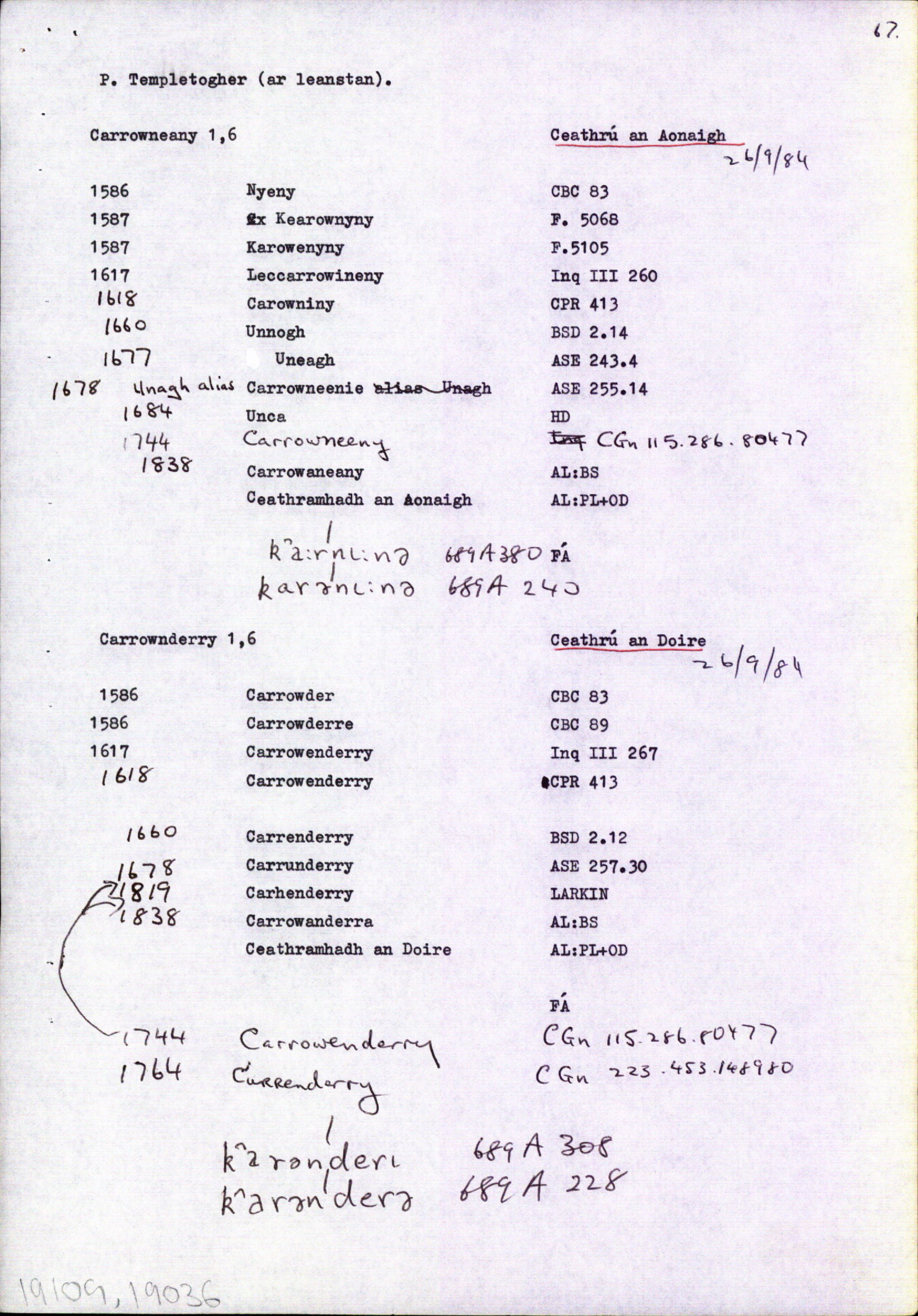
O’Donovans Field Name Documents provides the description and situation, stating “There are three small portions of bog in this townland and a large portion at the North boundary which is flooded in Winter. The road from Dunmore to Kilnalag passes from W. to E. through the townland from which a road branches off N. side to a village named after the townland. There is a gravel pit North East boundary. The remainder of the land is tillage and pasture. Carrowaneany is situated 1 mile N. N.E. of middle Cloonmaghlaura in the townland of Cloonmaghlaura.”. The geographic centre point of this townland is 53.6802, -8.61605.
1856 Griffiths Valuation
According to Griffiths Valuation, there were 11 plots of land surveyed. The total value was listed as 76 pounds and 10 shillings. The immediate lessor for every listing was Daniel O’.C Firench [sic]. See the original documentation here.
Entry one was occupied by Peter Keherny and Michael Connolly, both of whom rented a house, office and land. There are 5 subsections. Section A was 10 acres, 2 roods and 16 perches in size, valued at 2 pounds. Section B was 4 acres, 1 rood and 24 perches in size and valued at 2 pounds and 6 shillings. Section C was 3 acres, 2 roods and 3 perches in size and valued at 1 pound and 14 shillings. Section D was 3 acres, 1 rood and 23 perches in size, valued at 1 pound and 12 shillings. Section E was 6 acres and 7 perches in size, valued at 1 pound and 8 shillings. The buildings on the property were valued at 13 shillings. In total, the property possessed by each individual is valued at 5 pounds and 5 shillings.
Entry two is occupied by James Davis, renting a house, office and land. There are 5 sections. Section A is 4 acres, 3 roods and 8 perches in size, valued at 2 ppounds and 4 shillings. Section B is 2 roods in size, valued at 4 shillings. Section C is 3 acres, 3 roods and 17 perches in ize, valued at 15 shillings. Section D is 1 acre, 3 roods and 13 perches in size and valued at 5 shillings. Section E is 2 roods and 32 perches in size, valued at 1 pound and 10 shillings. The buildings were valued at 14 shillings, equating to a total value of 4 pounds and 10 shillings.
Entry three was occupied by James Davis, Peter Keherny and Michael Connolly. There were 2 sections. Section A was 7 acres and 2 roods in size and valued at 1 pound and 10 shillings. Section B is 1 acre and 20 perches in size, valued at 1 shilling. James’ land was valued at 15 shillings, whereas Peter and Michael’s were valued at 8 shillings each.
Entry four was occupied by Catherine and Patrick Davis. Catherine rented a house, land and offices and Patrick rented a house and land. In total, there were 39 acres, 8 roods and 27 perches. In addition, the buildings were valued at 1 pound and 15 shillings, leading to a total value of 7 pounds for Catherine and 6 pounds and 15 shillings for Patrick.
Entry Five was occupied by John Kearns and Michael Kearns. They both rented a house and land. The land was 25 acres, 19 roods and 32 perches in size. The buildings were valued at 10 shillings, bringing the total value to 4 pounds and 12 shillings per person.
Entry six was occupied by Thomas Davis, he rented a house, land and offices. There were four sections. Section A was 12 acres and 12 perches and valued at 5 pounds and 5 shillings. Section B was 3 acres and 33 perches and valued at 10 shillings. Section C was 3 roods and 23 acres and valued at 9 shillings. Section D was 6 acres and 33 perches and valued at 2 pounds and 5 shillings. perches in size and the buildings were valued at 1 pound.
Entry seven was occupied by Martin Connolly. He rented 7 acres, 2 roods and 30 perches of land valued at 2 pounds and 10 shillings and one house valued at 10 shillings, totaling to 3 pounds.
Entry Eight was occupied by Martin Connolly and Thomas Davis, who both rented land. Section A was 14 acres in size and valued at 2 pounds and 17 shillings. Section B was 4 acres and 2 roods in size and valued at 3 shillings.
Entry nine was occupied by Richard Davis, renting a house, offices and land. Sectrion A was 24 acres and 5 perches, valued at 10 pounds. Section B is 6 acres and 30 perches in size, valued at 2 shillings. Section C is 2 acres,3 roods and13 perches in size and is valued at 15 shillings. Section D is 1 acre and 3 perches and is valued at 10 shillings.
Entry ten is occupied by Richard Knight, renting a house, office and land. Section A is 8 acres and 16 perches in size, valued at 3 pounds and 5 shillings, with buildings valued at 1 pound and 3 shillings. Section B is 1 acre, 3 roods and 33 perches, valued at 10 shillings and buildings worth 15 shillings. In total, this property was valued at 4 pounds and 10 shillings.
Entry eleven was occupied by Richard Knight and Rihard Davis, renting land 18 acres, 1 rood [illegible] and 22 perches, valued at 4 pounds and 10 shillings in total.
1901 Census
According to the Enumerator’s Abstract, there were 12 households in the townland with 34 outhouses. There were a total of 24 females and 22 males in this townland, all of which were listed as Roman Catholic and originally from Galway.
Household 1
Mary Davis (60) was head of household was the head of household, a widow and farmer that could not read. She lived with her sons John (32) James (24), Richard (20) and daughter Mary (27), all of whom were single and could read and write in Irish and English. She also lived with her grandson Patrick Finnigan (11). According to Form B1, they lived in a 3rd class private dwelling. The walls were made out of stone, brick or concrete. The roof was made out of thatch, wood or another perishable material. There were between 2 and 4 rooms in the house with windows at the front. According to Census Form B2, the property had a stable, cowhouse, piggery and barn
Household 2
The head of household was John Connelly (50), a farmer his wife, Margaret (49) Catherine (32) and William (26) were listed as a Farmer’s Daughter and Son respectively, neither of them were married. All could read and write in Irish and English. According to Census Form B2, the property had a stable, cowhouse, piggery and barn. According to Form B1, they lived in a 2nd class private dwelling. The walls were made out of stone, brick or concrete. The roof was made out of thatch, wood or another perishable material. There were between 2 and 4 rooms in the house with windows 6 at the front.
Household 3
The head of household was Mary Kearney (60), listed as a Farmer’s Wife and widow, she lived with her son James (26) and daughters Honor (25) and Mary (23). All could read and write in Irish and English. According to Form B1, they lived in a 3rd class private dwelling. The walls were made out of stone, brick or concrete. The roof was made out of thatch, wood or another perishable material. There were between 2 and 4 rooms in the house with 5 windows at the front. According to Form B2, the property had a cowhouse, piggery and barn
Household 4
The head of household was Patrick Davis (34), a farmer that could read and write in Irish and English. As could his wife, Bridget (26). They had one daughter, Bridget (1). According to Form B1, they lived in a 3rd class private dwelling. The walls were made out of stone, brick or concrete. The roof was made out of thatch, wood or another perishable material. There were between 2 and 4 rooms in the house with 5 windows at the front. According to Census Form B2, the property had a stable, cowhouse, piggery and barn
Household 5
The head of household was Mary Connelly (46), listed as a married Farmer’s Wife that could not read but could speak Irish and English. She lived with her 3 children, Bridget (11), Mary (9) and Patrick (7), who were all listed as scholars. According to Form B1, they lived in a 3rd class private dwelling. The walls were made out of stone, brick or concrete. The roof was made out of thatch, wood or another perishable material. There were between 2 and 4 rooms in the house with 5 windows at the front. According to Form B2, the property had a cowhouse, piggery and barn
Household 6
The head of household was Julia Daves [sic] (60), a widow and Farmer’s Wife who could not read, she lived with her daughter Julia (22) and son Patrick (20), both listed as an unmarried Farmers Daughter and Son respectively. Both could read and write in Irish and English. According to Form B1, they lived in a 3rd class private dwelling. The walls were made out of stone, brick or concrete. The roof was made out of thatch, wood or another perishable material. There were between 2 and 4 rooms in the house with 5 windows at the front. According to Form B2, the property had a cowhouse and a piggery.
Household 7
The head of household was John Kearins [sic] (80), was a married farmer. His wife was Ellen (65). They lived with their three unmarried children, Farmer’s Son Martin (40), Home Keeper, Ellen (28) and Scholar Mary (13). All could read and write in Irish and English. According to Form B1, they lived in a 3rd class private dwelling. The walls were made out of stone, brick or concrete. The roof was made out of thatch, wood or another perishable material. There were between 2 and 4 rooms in the house with 5 windows at the front. According to Census Form B2, the property had a stable, cowhouse, piggery and barn
Household 8
The head of household was Michael Doherty (42), a Farmer, married to Mary (42). They lived with their 4 children, Bridget (6) Margaret [illegible](5) Michael (3) and Patrick (9 months). None could read, but all could speak Irish and English. According to Form B1, they lived in a 3rd class private dwelling. The walls were made out of stone, brick or concrete. The roof was made out of thatch, wood or another perishable material. There were between 2 and 4 rooms in the house with 4 windows at the front. According to Form B2, the property also contained a piggery
Household 9
The head of household was Bridget Knight (30), a widow and Farmer who lived with her son John (6). Additionally, there were three individuals from the Fleming family, whose occupations were listed as “Traveller Beggar” and relationship to the head of household was listed as “Lodger”, they were Pat (58), his wife Mary (58), and Michl [sic] (33). Only Michl Fleming and John Knight could read and write, though John was the only occupant that could only speak English. According to Form B1, they lived in a 3rd class private dwelling. The walls were made out of stone, brick or concrete. The roof was made out of thatch, wood or another perishable material. There were between 2 and 4 rooms in the house with 4 windows at the front. According to Census Form B2, the property had no outhouses.
Household 10
The head of household was Bridget Davis (60), a widow who lived with her 3 unmarried children, Thomas (30), Martin (25) and Mary (20). All could read and write in Irish and English and were listed as Famers. According to Census Form B2, the property had a stable, cowhouse, piggery and barn. According to Form B1, they lived in a 2nd class private dwelling. The walls were made out of stone, brick or concrete. The roof was made out of thatch, wood or another perishable material. There were between 2 and 4 rooms in the house with 6 windows at the front.
Household 11
The head of household was Hugh Smyth (66). He lived with his son Thomas (24), listed as an unmarried Farm Labourer. Both could read and write in Irish and English. According to Form B1, they lived in a 3rd class private dwelling. The walls were made out of stone, brick or concrete. The roof was made out of thatch, wood or another perishable material. There were between 2 and 4 rooms in the house with 5 windows at the front. According to Form B2, the property had an additional outhouse building in a piggery
Household 12
The head of household was farmer Michael Davis (60), his wife Mary (60) was listed as a Farmer’s Wife. They lived with their son Pat (34) and daughter Catherine (27), who were both unmarried and listed as Farmer’s Son and Farmer’s Daughter. All could read and write in Irish and English. According to Form B1, they lived in a 3rd class private dwelling. The walls were made out of stone, brick or concrete. The roof was made out of thatch, wood or another perishable material. There were between 2 and 4 rooms in the house with 5 windows at the front.According to Census Form B2, the property had a stable, cowhouse, piggery and barn
1911 Census
There were 11 households and 36 outhouses within Carrowneany. According to the Enumerator’s Abstract (Form N) carried out by Constable John Sherlock, there were a total of 22 males and 24 females, all of which are listed as Catholic.
Household 1
Michael Doherty (55) was head of the household. A farmer by profession, he had been married to his wife Mary (52) for 17 years. They had 6 children, Bridget (16), Maggie (14) and Mary Ellen (8) were the names of their daughters and Michael (12), Pat (10) and Thomas (6) were their sons. They could all speak and write both English and Irish, with the exception of the head of household, who couldn’t write and the youngest child Thomas, who could not read. Of the children, only Michael, Pat and Mary Ellen are listed as scholars, but all children are listed as single. All occupants were originally from Galway. They lived in a 3rd class private dwelling with one room, according to Form B1. The walls were made out of stone, brick or concrete. The roof was thatched, made out of wood or another perishable material with one window at the front of the house. According to Form B2, the property had 3 outhouses: one stable, one cowhouse and one piggery.
Household 2
Julia Davis (70) was listed as the head of household, a widowed farmer that could not read, but could speak Irish and English. She lived with her daughter Julia (30), who could read and write and was unmarried, and her son Pat (27), listed as a single farmer’s son that could read and write in Irish and English. They lived in a 3rd class private dwelling in Form B1. There were 2 rooms in the house. The walls were stone, brick or concrete and the with windows at the front the roof was thatched, made out of wood or another perishable material. There were 2 windows at the front of the house. According to Form B2, there were four outhouse properties; a stable, a piggery cowhouse and barn.
Household 3
The head of household was John Conneally (78), a married farmer. His wife was Maggie (73). They lived with their son Willliam (25), who was listed as a single Farmer’s Son, and their daughter Nannie [sic] (19,) whose occupation was also listed as a Farmer’s Son. All could read and write in Irish and English and were from Galway. Listed as a 2nd class private dwelling with 2 rooms, per Form B1. The walls were stone, brick or concrete and the with windows at the front the roof was thatched, made out of wood or another perishable material. There were 3 windows at the front of the house. According to Form B2, there were four outhouse properties; a stable, a piggery, cowhouse and barn.
Household 4
Pat Davis (45) was the head of household, a farmer by profession. He lived with his siter, Catherine (37). Both were unmarried and could read and write. They lived in a 2nd class private dwelling according to Form B1. There were 2 rooms in the house. The walls were stone, brick or concrete and the with windows at the front the roof was thatched, made out of wood or another perishable material. There were 3 windows at the front of the house. According to Form B2, there were three outhouse properties; a stable, a piggery and cowhouse.
Household 5
Mary Kearney (74) was listed as the head of household, a widowed farmer that could not read. She lived with her son James (40) and her daughter Mary (35). Both were unmarried and could read and write. Listed as a 2nd class private dwelling as per Form B1. There were 2 rooms in the house. The walls were stone, brick or concrete and the with windows at the front the roof was thatched, made out of wood or another perishable material. There were 3 windows at the front of the house. According to Form B2, there were four outhouse properties; a stable, a piggery, cowhouse and barn.
Household 6
Hugh Smyth (73) was the head of household. He was a widower and a farmer and could not read. He lived with his son, Thomas (34), daughter in law, Kate (30) and their 3 children, who were listed as scholars, Hugh (5), Mary-Anne (4) and Delia (3)All could speak Irish and English. Only Thomas and Kate could read and write. They lived in a 3rd class private dwelling with a single room as stated by Form B1. The walls were stone, brick or concrete. The roof was either thatched, made out of wood or another perishable material. There were 3 windows at the front of the house. According to Form B2, there were three outhouses; a stable, a piggery and cowhouse.
Household 7
The head of household was listed as John Tarmery (40), a married farmer that could read and write in Irish and English. As could his wife Bridget (39). They had 5 children. The eldest 2, Bridget (11) and Patrick (6) could read and write, but the youngest three, John (4), Celia (3) and Maggie (2), could not. The house was listed as a 2nd class private dwelling with 2 rooms under Form B1. The walls were made of stone, brick or concrete and the with windows at the front the roof was thatched, made out of wood or another perishable material. There were 3 windows at the front of the house. According to Form B2, there were three outhouses; a stable, a piggery and cowhouse.
Household 8
Martin Kearns (40) was the head of household. He was listed as a farer and could read and write. His wife Mary (39) could also read and write. Their two sons, John (2) and James (1) were listed as Farmer’s Sons and could not read or write. Listed as a 2nd class private dwelling, under Form B1. There were 2 rooms in the house. The walls were stone, brick or concrete and the with windows at the front the roof was thatched, made out of wood or another perishable material. There were 3 windows at the front of the house. According to Form B2, there were three outhouses; a stable, a piggery and cowhouse.
Household 9
Bridget Davis (72) was the head of household, a farmer and widow who could not read. She had 7 children, with 5 alive at the time of the Census. She lived with her son Martin (37) and daughter Mary (31), were both unmarried and could read and write. Listed as a 2nd class private dwelling, under Form B1. There were 2 rooms in the house. The walls were stone, brick or concrete and the with windows at the front the roof was thatched, made out of wood or another perishable material. There were 3 windows at the front of the house. According to Form B2, there were three outhouses, there were three outhouses, a stable, a piggery and cowhouse.
Household 10
Mary Davis (72) was the head of household, a widow and farmer that could not read. She had 9 children, 6 of whom were still alive at the time the census was taken. She lived with her two sons James (33), Richard (30) and daughter Mary (36), all of whom were single and could read and write in Irish and English. Listed as a 2nd class private dwelling, under Form B1. There were 2 rooms in the house. The walls were stone, brick or concrete and the with windows at the front the roof was thatched, made out of wood or another perishable material. There were 3 windows at the front of the house. According to Form B2, there were three outhouses; a stable, a piggery and cowhouse.
Household 11
Bridget Knight (49) was the head of household. Listed as a 3rd class private dwelling with one room in the house, according to Form B1. The walls were stone, brick or concrete and the with windows at the front the roof was thatched, made out of wood or another perishable material. There were 2 windows at the front of the house. According to Form B2, there were three outhouses, a stable, a piggery and cowhouse.
No Comments
Add a comment about this page