
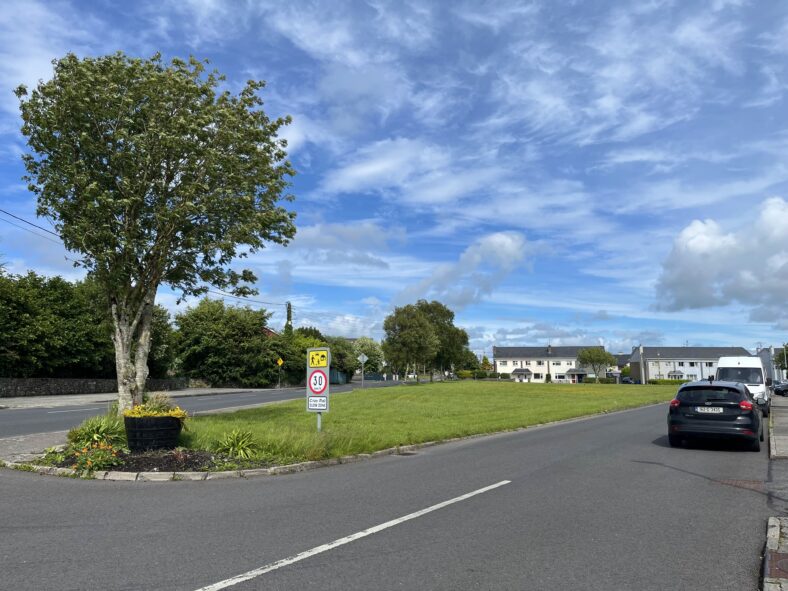
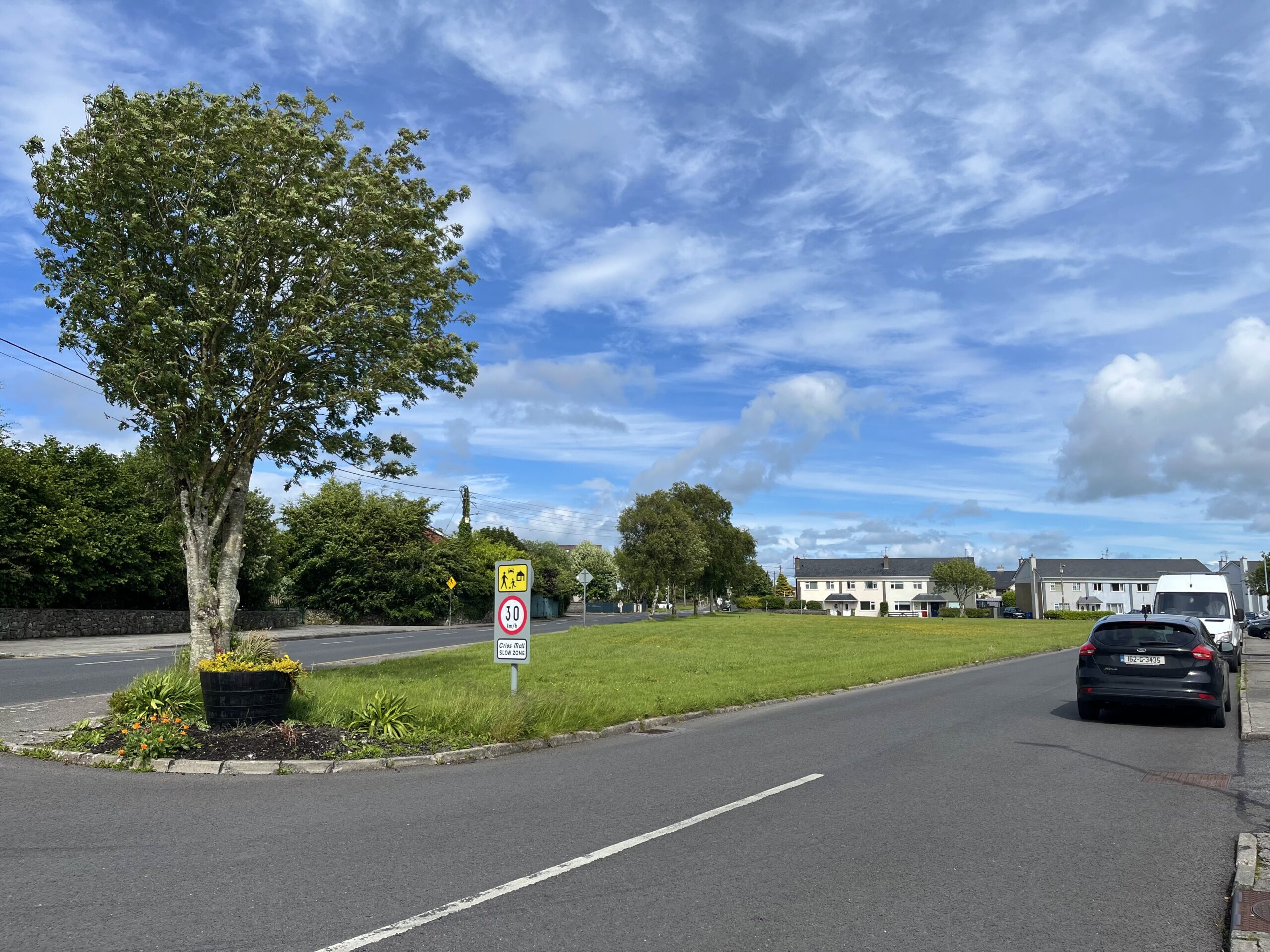
Cuscarrick
County: Galway
Barony: Loughrea
Municipal District: Loughrea
Civil Parish: Loughrea
Roman Catholic Parish: Loughrea (St. Brendan’s)
District Electoral Division: Loughrea Rural (1901, 1911), Loughrea Town (1901) and Loughrea Urban (1911)
Area (Loughrea Rural): 183.76 acres (183 acres, 3 roods), according to Townlands.ie
Area (Loughrea Urban): 82.79 acres (82 acres, 3 roods, 6 perches), according to Townlands.ie
OS Map (Larkin, 1819): Available here
OS Map (6” OS, 1840): Available here
Irish Form Of Name: According to Logainm, the Irish form of the name is ‘Cois Carraige’ (cos / cois, meaning ‘foot’ or ‘beside’ and ‘carraig’, meaning ‘rock’). According to O’Donovan’s Field Name Books, the translation is ‘foot of the rock.’ Similarly, the translation according to P. W. Joyce is ‘foot of the rock.’
O’Donovan’s Field Name Books
Description: ‘This townland is long and of an irregular form, all arable. About half of it pasture, remainder tillage. It contains one Danish Fort, and one Trigl. Station. Proprietor Earl of Clanricarde. Rent per acre £1. 5. to 30 shillings. County Cess 1s. half yearly.’
Situation: ‘In the western part of the parish is by the townlands of Knockauncorragh [Knockauncoura], Tullagh Upper, Poularabuck [Pollroebuck], Loughrea and Loughrea Lake in this parish by Coorheen [Curheen] and Cahercrea East in that of Killeenadeema and by Raheenoughter in that of Kilconickny.’
Tithe Applotment Books (1828)
The Tithe Applotment Books feature the townland of Cuscarrick, which was split into two sections, Cuscarrick West (recorded as ‘Caseanig West’) and Cuscarrick East (recorded as Caseanig East, and Cascearig East). In total, 4 named tithe-payers were recorded: James Daly, Siles Barrett, Thos. [Thomas] Ryan and Hubert Dolphin.
Griffith’s Valuation (1847-1867) For Cuscarrick
According to Griffith’s Valuation, the townland of Cuscarrick comprised 255 acres, 3 roods and 29 perches of land, at a total annual valuation of £251 6s before exemptions, 256 acres and £289 6s including exemptions. Cuscarrick was divided among 41 recorded entries, which included a rural portion of the townland, ‘Cuscarrick’, a section designated as the Town of Loughrea, which was split between ‘Galway Road (South-West End)’, ‘Galway Road (Continued), Here Lane Intersects’, and an area designated as ‘Fair-Green’.
The Marquis of Clanricarde was the primary landholder and immediate lessor for the majority of households recorded within the townland. The exceptions to this were Bryan Ryan, whose immediate lessor was Oliver Dolphin; Thomas Fennessy, who leased from James Quinn; Patrick Marran, who leased from Thaddeus Keely; as well as Thomas Fahy, Margaret Fahy, John Ford [Forde], and John Quirk [Quirke], who all leased their properties from Mary Dolphin. Two properties were recorded as vacant under the Marquis of Clanricarde, the first of which was 15 perches in size and had a house, a yard and a garden, for which the land was valued at 5s and the buildings at 10s, giving a total annual valuation rate of 15s. The second vacant property was 12 perches in size and had a house, a yard and a garden on it, for which the land was valued at 3s and the buildings at 12s, giving a total annual valuation rate of 15s. An additional vacant property, which featured a house and was valued at 5s, was recorded with Joseph Fahy as the immediate lessor.
The recorded occupants within the townland were: Oliver Dolphin, Bryan Ryan, Henry Brolly, Robert D’Arcy, Bernard McDonnell, Patrick McCarthy, the Rt. Rev. John Derry, Michael Caulfield, Michael Joyce, John Gilligan, Stephen Wall, Thomas Fennessy, Margaret Costelloe, Michael Moran, Martin Hanshin, Patrick Henry, Patrick Manton, Martin Fahy, Thomas Callan, John Cooney, Patrick Martin, Bridget O’Brien, John Sheehan, Michael Kenny, Mary Burke, John McLoughlin, John Callanan, Thaddeus Keely, Patrick Marran, Thomas Fahy, Margaret Fahy, John Ford [Forde], John Quirk [Quirke], Thomas Watkins, and Judith Hynes. The largest holding within the townland was held by Oliver Dolphin, who leased 89 acres, 1 rood and 24 perches of land, while the smallest holding was held by Thomas Fennessy, who leased 10 perches of land from James Quinn. Names that appeared to hold a house and office included Oliver Dolphin, Bryan Ryan, Henry Brolly, Patrick McCarthy, Michael Caulfield, Thomas Callan, Thaddeus Keely and John Quirk [Quirke]. Numerous other occupants held houses with yards and gardens, while Robert D’Arcy, Bernard McDonnell and the Rt. Rev. John Derry held land only.
The Marquis of Clanricarde leased tenements in the rural portion of Cuscarrick to all named occupants, except for Bryan Ryan, whose immediate lessor was Oliver Dolphin. The Marquis of Clanricarde also kept a portion of land in Cuscarrick for himself in fee, measuring 12 acres, 2 roods and 21 perches in size, which was valued at £13 10s.
Oliver Dolphin leased 89 acres, 1 rood and 24 perches of land, on which he had a herd’s house. He paid £60 for the land and 5s for the buildings, with his total annual valuation of rateable property amounting to £60 5s. Oliver Dolphin also leased 75 acres, 2 roods and 8 perches of land to Bryan Ryan, on which he had a house and an office. Bryan Ryan paid £48 for the land and £2 10s for the buildings, with his total annual valuation of rateable property amounting to £50 10s.
Henry Brolly leased 9 acres and 3 roods of land, on which he had a house and offices. He paid £10 5s for the land and £3 for the buildings, with his total annual valuation of rateable property amounting to £13 5s.
Robert D’Arcy leased 29 acres, 3 roods and 22 perches of land, with his total annual valuation of rateable property amounting to £40.
Bernard McDonnell leased 14 acres, 2 roods and 36 perches of land, with his total annual valuation of rateable property amounting to £12 10s.
Patrick McCarthy leased 10 acres, 2 roods and 6 perches of land, on which he had a herd’s house and an office. He paid £12 15s for the land and 15s for the buildings, with his total annual valuation of rateable property amounting to £13 10s.
The Rt. Rev. John Derry leased 6 acres, 1 rood and 31 perches of land, with his total annual valuation of rateable property amounting to £7 10s.
Town Of Loughrea, Galway Road (South-West End)
Apart from Thomas Fennessy, whose immediate lessor was James Quinn, every other occupant in this portion of the townland had the Marquis of Clanricarde as their immediate lessor. This included: Michael Caulfield, Michael Joyce, John Gilligan, Stephen Wall, Margaret Costelloe, Michael Moran, Martin Hanshin, Patrick Henry, Patrick Manton, Martin Fahy, Thomas Callan and John Cooney.
Michael Caulfield leased 22 perches of land, on which he had a house, an office, a yard and a garden. He paid 5s for the land and £1 for the buildings, at a total annual valuation rate of £1 5s.
Michael Joyce leased 22 perches of land, on which he had a house, a yard and a garden. He paid 5s for the land and £1 5s for the buildings, at a total annual valuation rate of £1 10s.
John Gilligan leased 18 perches of land, on which he had a house, a yard and a garden. He paid 5s for the land and £1 for the buildings, at a total annual valuation rate of £1 5s.
Stephen Wall leased 31 perches of land, on which he had a house, a yard and a garden. He paid 10s for the land and £2 for the buildings, at a total annual valuation rate of £2 10s.
Margaret Costelloe leased 29 perches of land, on which she had a house, a yard and a garden. She paid 8s for the land and 12s for the buildings, at a total annual valuation rate of £1.
Michael Moran leased 15 perches of land, on which he had a house, a yard and a garden. He paid 4s for the land and £1 1s for the buildings, at a total annual valuation rate of £1 5s.
Martin Hanshin leased 14 perches of land, on which he had a house, a yard and a garden. He paid 4s for the land and £1 1s for the buildings, at a total annual valuation rate of £1 5s.
Patrick Henry leased 23 perches of land, on which he had a house, a yard and a garden. He paid 6s for the land and 15s for the buildings, at a total annual valuation rate of £1 1s.
Patrick Manton leased 16 perches of land, on which he had a house, a yard and a garden. He paid 5s for the land and 15s for the buildings, at a total annual valuation rate of £1.
Martin Fahy leased 14 perches of land, on which he had a house, a yard and a garden. He paid 5s for the land and £1 for the buildings, at a total annual valuation rate of £1 5s.
Thomas Callan leased 14 perches of land, on which he had a house, an office, a yard and a garden. He paid 5s for the land and £1 5s for the buildings, at a total annual valuation rate of £1 10s.
John Cooney leased 12 perches of land, on which he had a house, a yard and a garden. He paid 3s for the land and £1 2s for the buildings, at a total annual valuation rate of £1 5s.
Thomas Fennessy leased 10 perches of land from James Quinn, on which he had a house, a yard and a garden. He paid 5s for the land and 10s for the buildings, at a total annual valuation rate of 15s.
Town Of Loughrea, Galway Road (Here The Lane Intersects)
The Marquis of Clanricarde was the landholder and immediate lessor for the majority of occupants in this portion of the townland. These were: Patrick Martin, Bridget O’Brien, John Sheehan, Michael Kenny, Mary Burke, John McLoughlin, John Callanan, Thaddeus Keely, Thomas Watkins, and Judith Hynes. Patrick Marran leased from Thaddeus Keely, while Thomas Fahy, Margaret Fahy, John Ford [Forde] and John Quirk [Quirke] leased from Mary Dolphin.
Patrick Martin leased 10 perches of land, on which he had a house, a yard and a garden. He paid 2s for the land and 18s for the buildings, at a total annual valuation rate of £1.
Bridget O’Brien leased 11 perches of land, on which she had a house, a yard and a garden. She paid 3s for the land and 17s for the buildings, at a total annual valuation rate of £1.
John Sheehan leased a house, a yard and a small garden, at a total annual valuation rate of £1.
Michael Kenny leased a house, a yard and a small garden, at a total annual valuation rate of 15s.
Mary Burke leased 10 perches of land, on which she had a house, a yard and a garden. She paid 3s for the land and 12s for the buildings, at a total annual valuation rate of 15s.
John McLoughlin leased 12 perches of land, on which he had a house, a yard and a garden. He paid 3s for the land and £1 7s for the buildings, at a total annual valuation rate of £1 10s. According to Slater’s Directory (1881), he was a blacksmith.
John Callanan leased 13 perches of land, on which he had a house, a yard and a garden. He paid 3s for the land and £1 7s for the buildings, at a total annual valuation rate of £1 10s.
Thomas Watkins leased a property which held a house, a yard and a small garden from the Marquis of Clanricarde, valued at 10s. Similarly, Judith Hynes leased a house from Clanricarde, valued at £1.
Thaddeus Keely leased 2 roods and 29 perches of land from the Marquis of Clanricarde, on which he had a house, an office, a yard and a garden. He paid £1 5s for the land and £1 5s for the buildings, at a total annual valuation rate of £2 10s. Thaddeus also subet property containing a house and a yard to Patrick Marran, valued at 15s.
Thomas Fahy leased 12 perches of land from Mary Dolphin, on which he had a house, a yard and a garden. He paid 3s for the land and 12s for the buildings, at a total annual valuation rate of 15s.
Margaret Fahy leased a house and a yard from Mary Dolphin, at a total annual valuation rate of 10s.
John Ford [Forde] leased 11 perches of land from Mary Dolphin, on which he had a house, a yard and a garden. He paid 3s for the land and £1 17s for the buildings, at a total annual valuation rate of £2.
John Quirk [Quirke] leased 10 perches of land from Mary Dolphin, on which he had a house, an office, a yard and a garden. He paid 3s for the land and £2 2s for the buildings, at a total annual valuation rate of £2 5s.
Recorded as part of Cuscarrick, under the sub-heading ‘Fair-Green’, the ‘Bridewell’ and the ‘Court-house’ were two adjoining buildings located where the Loughrea District Courthouse currently stands today. The ‘half annual rent of bridewell and court-house’ was £4. The courthouse and bridewell, alongside ‘Waste under houses, yards, streets, and small gardens’ (under the Marquis of Clanricarde), which was noted as 4 acres and 13 perches, form the exemptions for the total rateable valuation of property within the townland.
The exemptions were as follows, with the Marquis of Clanricarde listed as immediate lessor. The bridewell and yard had buildings valued at £12. The courthouse and yard measured 11 perches, with the land valued at 10s and the buildings at £25 10s, giving a total annual valuation rate of £26. The total of these exemptions amounted to 11 perches of land valued at 10s and the buildings at £37 10s, giving a total annual valuation rate of exemptions of £38.
Before exemptions, Cuscarrick was 255 acres, 3 roods and 29 perches in size, with the total of rateable property valued at £210 16s for land and £36 10s for the buildings, alongside an additional £4 for ‘Waste under houses, yards, streets, and small gardens’, giving a total annual valuation rate of £251 6s. Including exemptions, Cuscarrick measured 256 acres in size, with the land valued at £211 6s and the buildings at £74, giving a total annual valuation rate of rateable property of £289 6s. The land in Cuscarrick was valued at approximately 16s 6d per acre.
Nineteenth Century Census Information For Cuscarrick
The following is census information compiled from 2 different sources. Firstly, The Census of Ireland For The Year 1851, Part 1, Showing The Area, Population And Number Of Houses By Townlands And Electoral Divisions (County Of Galway) (Page 65). Secondly, The Census Of Ireland, 1891, Part 1, Area, Houses, And Population: Also The Ages, Civil Or Conjugal Condition, Occupations, Birthplaces, Religion, And Education Of The People, Vol. IV. Province Of Connaught, No. 1 County Of Galway (Page 93). Please note that the figures for 1841, 1851 and 1861 are for the entire townland (Loughrea Rural and Loughrea Town/Urban).
1841: The population of Cuscarrick in 1841 was 68 people, consisting of 34 males and 34 females. There were a total of 12 houses recorded, all of which were inhabited.
1851: The population of Cuscarrick in 1851 was 31 people, consisting of 18 males and 13 females. There were a total of 6 inhabited houses recorded, a decrease of 50% in the span of only 10 years. The Poor Law valuation for the townland in 1851 was £186 15s. The area of Cuscarrick in 1851 was 256 acres.
1861: The population of Cuscarrick in 1861 was 30 people, with a total of 7 houses recorded.
1871: The population of Cuscarrick (Loughrea Rural) was 42 people, with a total of 4 houses recorded.
1881: The population of Cuscarrick (Loughrea Rural) was 17 people, with a total of 3 houses recorded.
1891: The population of Cuscarrick (Loughrea Rural) was 13 people, consisting of 6 males and 7 females, with a total of 3 inhabited houses and 21 out-offices recorded. In 1891, the total valuation of houses and land in Cuscarrick (including Loughrea Town) was £261 14s. The area of Cuscarrick (Loughrea Rural) in 1891 was 180 acres, 2 roods and 32 perches.
1901 Census For Cuscarrick
Overview Of Cuscarrick (Loughrea Rural) In 1901
According to the 1901 Census, there were a total of 3 households in Cuscarrick (Loughrea Rural), 2 of which were inhabited, while 1 household (with Bridget Ryan as the landholder) was uninhabited. Both inhabited households were 2nd-class private dwellings. According to Form B1 of the House and Building Return, the walls of all inhabited households were constructed of stone, brick or concrete, while slate, iron, tile or other non-perishable material was used for roofing. The Fahy household had 5 rooms (with a sixth room designated as Cuscarrick National School) and 3 front windows, while the Ryan household had 8 rooms and 5 front windows.
The Enumerator’s Abstract Return recorded a total of 11 individuals in Cuscarrick (Loughrea Rural) at that time, consisting of 5 males and 6 females, with an average age of 30.7. Every individual was born in Co. Galway and was Roman Catholic. Literacy was 100%, with all 11 individuals able to read and write. Bilingualism was present, with 72.7% (8 individuals) recorded as able to speak both Irish and English.
The heads of each household were Michael Fahy and Bridget Ryan, who were also the landholders. Bridget Ryan was also recorded as the landholder for the third uninhabited household within the townland. According to Form B2 of the Out-Offices and Farm-Steadings Return, there were a total of 17 out-offices in the townland: 4 stables, 3 cow houses, 2 barns, a coach house, a calf house, a piggery, a fowl house, a turf house, a shed, a store and a laundry.
The head of the first household in Cuscarrick (Loughrea Rural) was Michael Fahy (56), who shared the home with his wife Mary A. Fahy (49), their daughters Mary M. (19) and Agnes (9) and their son Michael (11), all of whom were unmarried. Every member of the household was born in Co. Galway and was Roman Catholic. All could read and write, while Michael (56) and Mary A. (49) were the only members recorded as able to speak both Irish and English.
Michael (56) was a teacher, Mary M. (19) was a ‘monitor’ (a senior student hired to help the teacher in a primary school), while Michael (11) and Agnes (9) were scholars. It is likely that each of them attended or worked in Cuscarrick National School, as the enumerator noted that the sixth room of the Fahy household was designated as the school room. An annotation by the enumerator on Form B1 of the House and Building Return reads: ‘Note: No. 1 on this form has Six rooms. Five of which are occupied by the family the Sixth is used as a School Room known by the Board of National Education as Loughrea mixed. Although it’s in Coscorrig pt. of (Rural).’ Under the entry for the Fahy household, ‘Cuscarrick National School’ has been annotated.
They lived in a 2nd-class, 5-roomed private dwelling with 3 front windows. The walls of the home were made of stone, brick or concrete, while slate, iron, tile or other non-perishable material was used for roofing. There were 3 out-offices attached to the household: a stable, a cow house and a barn. Michael Fahy was the landholder.
Ryan Additional surnames: Coffee, Whelan, Maher
The head of the second household in Cuscarrick (Loughrea Rural) was Bridget Ryan (70), a widow, who shared the home with her son Thomas Ryan (41), her daughter Bridget A. Ryan (33), her granddaughter Maggie Coffee (13), and two servants, Patrick Whelan (22) and Peter Maher (15), all of whom were unmarried. Bridget (70) and Thomas Ryan (41) were farmers, Bridget A. Ryan (33) was a farmer’s daughter, Maggie Coffee (13) was a scholar, while Patrick Whelan (22) and Peter Maher (15) were both agricultural labourers. Every member of the household was born in Co. Galway and was Roman Catholic. All were recorded as able to read and write, and all could speak both Irish and English.
They lived in a 2nd-class, 8-roomed private dwelling with 5 front windows. The walls of the home were made of stone, brick or concrete, while slate, iron, tile or other non-perishable material was used for roofing. There were 14 out-offices attached to the household: 3 stables, 2 cow houses, a coach house, a calf house, a piggery, a fowl house, a barn, a turf house, a shed, a store and a laundry. Bridget Ryan was the landholder, and she was also recorded as the landholder for the third uninhabited household within the townland.
Overview Of Cuscarrick (Loughrea Town) In 1901
According to the 1901 Census, there were a total of 6 households in Cuscarrick (Loughrea Town). According to Form B1 of the House and Building Return, all were classed as private dwellings with the exception of the first household (Fallon), which was recorded as the ‘Bridewell’, a public building. The walls of all households were constructed of stone, brick or concrete, while slate, iron, tile or other non-perishable material was used for roofing, with the exception of the sixth household (Fallon), which had a roof made of wood, thatch or other perishable material. Every household had 3 rooms and 2 front windows, except for the first household, the Bridewell (a small jail which was adjacent to the Courthouse), which had 11 rooms and 12 front windows. House 1 was a 1st-class dwelling, House 6 was a 3rd-class dwelling, while Houses 2, 3, 4 and 5 were 2nd-class dwellings.
The Enumerator’s Abstract Return recorded a total of 41 individuals in Cuscarrick (Loughrea Town) at that time, consisting of 23 males and 18 females, with an average age of 25 (24.9). Literacy was 43.9% (18 individuals) able to read and write, 19.5% (8 individuals) able to read only, 26.8% (11 individuals) recorded as unable to read, and 9.8% (4 individuals) whose literacy was not specified. Bilingualism was present, with 12.2% (5 individuals) recorded as able to speak both Irish and English. The enumerator was Const. Martin Fahey.
The heads of each household were Patrick Fallon, Margaret Coy, John Kelleher, Thomas Casey, Michael Burke and Bridget Fallon. According to Form B2 of the Out-Offices and Farm-Steadings Return, there were a total of 6 out-offices in the townland: 4 piggeries and 2 sheds.
The head of the first household in Cuscarrick (Loughrea Town) was Patrick Fallon (51), who lived with his wife Mary Fallon (40), their sons Patrick (18), Edward (16), Michael (9), William (6) and John (2), as well as their daughter Mary (12), all of whom were unmarried. Patrick (51) was a Bridewell keeper, Patrick (18) was a carpenter, while Edward (16), Mary (12), Michael (9) and William (6) were all scholars. Every member of the household was Roman Catholic, and all were born in Co. Galway, except for Patrick (51), who was born in Co. Roscommon. All could read and write, apart from William (6), who could read only and John (2), who could not read. None were recorded as able to speak both Irish and English.
They lived in a 1st-class, 11-roomed public building, the ‘Bridewell’, which had 12 front windows. The walls of the building were made of stone, brick or concrete, while slate, iron, tile or other non-perishable material was used for roofing. There were 2 out-offices attached to the household: 2 sheds.
The head of the second household in Cuscarrick (Loughrea Town) was Margaret Coy (35), who shared the home with her sons Patrick (8), Martin (3), Joseph (1), her daughters Mary (7) and Ellen (5), as well as her father-in-law, Thomas Coy (68). Margaret (35) was recorded as married, while Thomas Coy (68) was a widower. Every member of the household was born in Co. Galway and was Roman Catholic. Margaret (35) and Patrick (8) were able to read and write, Mary (7) and Ellen (5) were able to read only, while Thomas Coy (68) could not read. Patrick (8), Mary (7) and Ellen (5) were recorded as scholars. Thomas Coy (68) was the only member of the household recorded as able to speak both Irish and English.
They lived in a 2nd-class, 3-roomed private dwelling with 2 front windows. The walls of the home were made of stone, brick or concrete, while slate, iron, tile or other non-perishable material was used for roofing. There was 1 out-office attached to the household, a piggery. Margaret Coy was the landholder.
The head of the third household in Cuscarrick (Loughrea Town) was John Kelleher (42), a general labourer, who shared the home with his wife Maria (44), and their sons Martin J. (12), John (7) and Christopher T. (5), who were all scholars. Every member of the household was born in Co. Galway and was Roman Catholic. John (42), Maria (44) and Martin J. (12) could read and write, John (7) could read only, while the literacy of Christopher T. (5) was not specified. None were recorded as able to speak both Irish and English.
They lived in a 2nd-class, 3-roomed private dwelling with 2 front windows. The walls of the home were made of stone, brick or concrete, while slate, iron, tile or other non-perishable material was used for roofing. There was 1 out-office attached to the household, a piggery. John Kelleher was the landholder.
The head of the fourth household in Cuscarrick (Loughrea Town) was Thomas Casey (39), a labourer, who shared the home with his wife, Catherine (35), their sons John (9) and Peter (5), and their daughter Mary (12), who were all scholars. Every member of the household was born in Co. Galway and was Roman Catholic. Mary (12) and John (9) were able to read and write, Thomas (39) and Peter (5) could read only, while the literacy of Catherine (35) was not specified. None were recorded as able to speak both Irish and English.
They lived in a 2nd-class, 3-roomed private dwelling with 2 front windows. The walls of the home were made of stone, brick or concrete, while slate, iron, tile or other non-perishable material was used for roofing. There was 1 out-office attached to the household, a piggery. Thomas Casey was the landholder.
Burke Additional surnames: Connor, Coleman
The head of the fifth household in Cuscarrick (Loughrea Town) was Michael Burke (40), who shared the home with his wife Lizzie [Elizabeth] Burke (38), their sons Lawrence (12), John (10), and their daughters Mary (11), Lizzie (7), Teresa (5), Kathleen (2) and Agnes (6 months old). Additionally, his mother-in-law, Anne Connors (60) and his nephew Joseph Coleman (16) were recorded within the home. Michael Burke (40) and Joseph Coleman (16) were general labourers, while Lawrence (12), Mary (11), Lizzie (7) and Teresa (5) were all scholars. Every member of the household was born in Co. Galway and was Roman Catholic. Joseph Coleman (16), Michael Burke (40), Lawrence Burke (12), and Mary Burke (11) could read and write, Lizzie [Elizabeth] Burke (38) could read only, while the remaining individuals were recorded as unable to read. None were recorded as able to speak both Irish and English.
They lived in a 2nd-class, 3-roomed private dwelling with 2 front windows. The walls of the home were made of stone, brick or concrete, while slate, iron, tile or other non-perishable material was used for roofing. There was 1 out-office attached to the household, a piggery. Michael Burke was the landholder.
Fallon Additional surname: Shiels
The head of the sixth household in Cuscarrick (Loughrea Town) was Bridget Fallon (66), a widow, who shared the home with her daughter Mary Shiels (32), who was married, her grandsons, Michael J. Shiels (6), a scholar, Patrick Shiels (3), and her granddaughter Sarah B. Shiels (2 months old). Every member of the household was born in Co. Galway and was Roman Catholic. Mary Shiels (32) was the only member who could read and write, Bridget Fallon (66) could read only, while Michael J. (6), Patrick (3) and Sarah B. (2 months old) could not read. Bridget Fallon (66) was the only member recorded as able to speak Irish and English.
They lived in a 3rd-class, 3-roomed private dwelling with 2 front windows. The walls of the home were made of stone, brick or concrete, while wood, thatch or other perishable material was used for roofing. There were no out-offices attached to the household.
Combined Overview Of Cuscarrick (Loughrea Rural & Town) In 1901
In the 1901 Census, the townland of Cuscarrick was split between two District Electoral Divisions: Loughrea Rural and Loughrea Town. In the rural portion, there were 3 households, 2 of which were inhabited, while 1 household was uninhabited. In the town portion, there were 6 households, all of which were inhabited. In total, there were 9 households in Cuscarrick in 1901, 8 of which were inhabited. The walls of every household were constructed of stone, brick, concrete or other non-perishable material. In Loughrea Rural, all inhabited households had roofs made of non-perishable material such as slate, iron or tile, while in Loughrea Town, all households had roofs made of non-perishable material with the exception of the sixth household (Fallon), which had a roof made of wood, thatch or other perishable material.
In Loughrea Rural, both inhabited households were 2nd-class dwellings. House 1 (Fahy) had 5 rooms (with a sixth room designated as Cuscarrick National School) and 3 front windows, while House 2 (Ryan) had 8 rooms and 5 front windows. In Loughrea Town, House 1 (the Bridewell) was a 1st-class dwelling with 11 rooms and 12 front windows; House 6 was a 3rd-class dwelling with 3 rooms and 2 front windows; while Houses 2, 3, 4 and 5 were 2nd-class dwellings, each with 3 rooms and 2 front windows.
The Enumerator’s Abstract Return recorded a total of 52 individuals in Cuscarrick at that time, consisting of 28 males and 24 females, with a combined average age of 26.3. Every individual was born in Co. Galway and was Roman Catholic, apart from Patrick Fallon (51), who was born in Co. Roscommon. Literacy across the townland was 55.8% (29 individuals) able to read and write, 15.4% (8 individuals) able to read only, 21.2% (11 individuals) recorded as unable to read, and 7.7% (5 individuals) whose literacy was not specified. Bilingualism was present, with 25% (13 individuals) recorded as able to speak both Irish and English.
The heads of each household were Michael Fahy, Bridget Ryan, Patrick Fallon, Margaret Coy, John Kelleher, Thomas Casey, Michael Burke and Bridget Fallon. There was a total of 23 out-offices in the townland: 4 stables, 4 piggeries, 3 cow houses, 2 barns, 2 sheds, a coach house, a calf house, a fowl house, a turf house, a store and a laundry. The enumerators were Const. Andrew Murphy (Loughrea Rural) and Const. Martin Fahey (Loughrea Town).
1911 Census For Cuscarrick
Overview Of Cuscarrick (Loughrea Rural) In 1911
According to the 1911 Census, there were a total of 3 households in Cuscarrick (Loughrea Rural), all classed as private dwellings. According to Form B1 of the House and Building Return, all households were constructed of stone, brick or concrete walls. The Ryan household had a roof made of slate, iron, tile or other non-perishable material, while the Coen and Fahy households had roofs made of wood, thatch or other perishable material. The Ryan and Fahy households were 2nd-class dwellings, while the Coen household was a 3rd-class dwelling. The Ryan household had 9 rooms and 5 front windows, the Coen household had 2 rooms and 2 front windows, and the Fahy household had 7 rooms and 5 front windows.
The Enumerator’s Abstract Return recorded a total of 13 individuals in Cuscarrick at that time, consisting of 6 males and 7 females, with an average age of 29.46. Every individual was Roman Catholic and born in Co. Galway, with the exception of Marianne Ryan, who was born in Co. Clare. Literacy was 69.2% (9 individuals) able to read and write, 7.7% (1 individual) able to read only, and 23.1% (3 individuals) whose literacy was not specified. Bilingualism was present, with 30.8% (4 individuals) recorded as able to speak both Irish and English. The enumerator was Const. John Corrigan.
The heads of each household were Thomas Ryan, John Coen and Michael A. Fahy, who were also the landholders. According to Form B2 of the Out-Offices and Farm-Steadings Return, there were a total of 23 out-offices in the townland: 4 cow houses, 2 stables, 2 dairies, 2 piggeries, 2 fowl houses, 2 barns, 2 sheds, 2 stores, a calf house, a boiling house, a coach house, a turf house, and a potato house.
Ryan Additional surname: McTigue
The head of the first household in Cuscarrick (Loughrea Rural) was Thomas Ryan (55), a farmer, who shared the home with his wife Marianne Ryan (35), as well as another occupant, Bartly McTigue (38), an unmarried farm servant. Thomas (55) had been married to Marianne (35) for 7 years and had no children born alive. Thomas Ryan (55) and Bartly McTigue (38) were born in Co. Galway, while Marianne Ryan (35) was born in Co. Clare. Every member of the household was Roman Catholic and could read and write. All were recorded as able to speak English only.
They lived in a 2nd-class, 9-roomed private dwelling with 5 front windows. The walls of the home were made of stone, brick or concrete, while slate, iron, tile or other non-perishable material was used for roofing. There were 15 out-offices attached to the household: 2 stables, 2 cow houses, a coach house, a calf house, a dairy, a piggery, a fowl house, a boiling house, a barn, a turf house, a potato house, a shed and a store. Thomas Ryan was the landholder.
The head of the second household in Cuscarrick (Loughrea Rural) was John Coen (40), a shepherd, who shared the home with his wife, Bridget Coen (35), whom he had been married to for 7 years and with whom he had 4 children born alive, all of whom were alive and resided within the home at the time. They lived with their daughters, Mary (6), a scholar, Catherine (4), Bridget (1 month old), and their son Joseph (2). Every member of the household was born in Co. Galway and was Roman Catholic. John (40) and Bridget (35) could read and write, Mary (6) could read only, while the literacy of Catherine (4), Joseph (2) and Bridget (1 month old) was not specified.
They lived in a 3rd-class, 2-roomed private dwelling with 2 front windows. The walls of the home were made of stone, brick or concrete, while wood, thatch or other perishable material was used for roofing. There were 3 out-offices attached to the household: a cow house, a piggery, and a fowl house. Thomas Ryan was the landholder.
The head of the third household in Cuscarrick (Loughrea Rural) was Michael A. Fahy (66), who shared the home with his wife, Mary Anne Fahy (63), their son Michael A. Fahy (21), and their daughter Agnes (18), both of whom were unmarried. Michael A. (66) had been married to Mary Anne (63) for 30 years, and with whom he had 6 children born alive, 3 of whom were still alive in 1911. Michael A. (66) was a retired teacher and farmer, while his son Michael A. (21) was recorded as a farmer’s son. Every member of the household was born in Co. Galway and was Roman Catholic. All could read and write, and every member was recorded as able to speak both Irish and English.
They lived in a 2nd-class, 7-roomed private dwelling with 5 front windows. The walls of the home were made of stone, brick or concrete, while wood, thatch or other perishable material was used for roofing. There were 5 out-offices attached to the household: a cow house, a dairy, a barn, a shed and a store. Michael A. Fahy was the landholder.
Overview Of Cuscarrick (Loughrea Urban) In 1911
According to the 1911 Census, there were a total of 6 households in Cuscarrick (Loughrea Urban), 5 of which were inhabited and 1 which was uninhabited (House 6, the Courthouse, with the Marquis of Clanricarde as landholder). There were 2 public buildings in the townland, the Courthouse (House 6) and the Bridewell (House 5). According to Form B1 of the House and Building Return, the walls of all inhabited households were constructed of stone, brick or concrete, while slate, iron, tile or other non-perishable material was used for roofing. All inhabited houses were 2nd-class private dwellings, with the exception of the Bridewell (Fallon household), which was a public building. Every inhabited household had 3 rooms and 2 front windows, with the exception of the Bridewell, which had 13 rooms and 4 front windows.
The Enumerator’s Abstract Return recorded a total of 29 individuals in Cuscarrick (Loughrea Urban) at that time, consisting of 21 males and 8 females, with an average age of 24.1. Every individual was Roman Catholic and born in Co. Galway, with the exception of Patrick Fallon (61), who was born in Co. Roscommon. Literacy was 69% (20 individuals) able to read and write, 13.8% (4 individuals) able to read only, 13.8% (4 individuals) recorded as unable to read, and 3.4% (1 individual) whose literacy was not specified. Bilingualism was present, with 3.4% (1 individual) recorded as able to speak both Irish and English (Maggie Coy). The enumerator was Const. Michael Reynolds.
The heads of each household were Maggie Coy, John Kelleher, Thomas Casey, Thomas Fitzpatrick and Patrick Fallon. Loughrea ‘D.C.’ [District Council] was the landholder for the Coy, Kelleher, Casey and Fitzpatrick households, while the Marquis of Clanricarde was the landholder for the Fallon household (the Bridewell) and for the sixth uninhabited property (the Courthouse). According to Form B2 of the Out-Offices and Farm-Steadings Return, there were a total of 10 out-offices in the townland: 4 piggeries, 4 sheds, a turf house and a potato house.
The head of the first household in Cuscarrick (Loughrea Urban) was Maggie Coy (47), who shared the home with her four sons, Patrick (19), Martin (12), Joseph (11) and William (8). While each of her sons were unmarried, Maggie (47) had been married for 22 years and had 7 children born alive, 6 of whom were still alive in 1911. Patrick (19) was a general labourer, while Martin (12), Joseph (11) and William (8) were all scholars. Every member of the household was born in Co. Galway and was Roman Catholic. Every member could read and write, while Maggie (47) was the only individual recorded as able to speak both Irish and English.
They lived in a 2nd-class, 3-roomed private dwelling with 2 front windows. The walls of the home were of stone, brick or concrete, while slate, iron, tile or other non-perishable material was used for roofing. There were 2 out-offices attached to the household: a piggery and a shed. ‘Loughrea D.C.’ [District Council] was the landholder.
The head of the second household in Cuscarrick (Loughrea Urban) was John Kelleher (51), who shared the home with his wife, Maria Kelleher (49), and their sons Martin (20), John (17) and Christopher (14), all of whom were unmarried. John (51) and Maria (49) had been married for 21 years and had 3 children born alive, all of whom were still alive and residing within the home in 1911. John (51), Martin (20) and John (17) were general labourers, while Christopher (14) was a scholar. Every member of the household was born in Co. Galway and was Roman Catholic. All were recorded as able to read only, except for Christopher (14), who could read and write. None were recorded as able to speak both Irish and English.
They lived in a 2nd-class, 3-roomed private dwelling with 2 front windows. The walls of the home were of stone, brick or concrete, while slate, iron, tile or other non-perishable material was used for roofing. There were 2 out-offices attached to the household: a piggery and a shed. Loughrea District Council was the landholder.
The head of the third household in Cuscarrick (Loughrea Urban) was Thomas Casey (50), who shared the home with his wife Catherine Casey (40), and their sons John (18), Peter (14) and Thomas (9). Thomas (50) and Catherine (40) had been married for 19 years and had 3 children born alive, all of whom were still alive and residing within the home in 1911. Thomas (50) and John (18) were both general labourers, while Peter (14) and Thomas (9) were scholars. Thomas (50) and each of his three sons were born in Loughrea, Co. Galway, while Catherine (40) was born in Ballinakill, Co. Galway. Thomas (50), John (18), Peter (14) and Thomas (9) were recorded as able to read and write, while the literacy of Catherine (40) was not specified, as was also the case in the 1901 Census. None were recorded as able to speak both Irish and English.
They lived in a 2nd-class, 3-roomed private dwelling with 2 front windows. The walls of the home were of stone, brick or concrete, while slate, iron, tile or other non-perishable material was used for roofing. There were 2 out-offices attached to the household: a piggery and a shed. Loughrea District Council was the landholder.
The head of the fourth household in Cuscarrick (Loughrea Urban) was Thomas Fitzpatrick (45), who shared the home with his wife, Mary Anne Fitzpatrick (35), their daughters Maggie (14), Bridget (12), Mary Anne (5), and their sons Martin (13) and Michael (1). Thomas (45) and Mary Anne (35) had been married for 16 years and had 7 children born alive, 5 of whom were alive and residing within the home in 1911. Thomas (45) was a general labourer, while Maggie (14), Martin (13), Bridget (12) and Mary Anne (5) were scholars. Every member of the household was born in Co. Galway and was Roman Catholic. Maggie (14), Martin (13) and Bridget (12) were able to read and write, while Thomas (45), Mary Anne (35), Mary Anne (5) and Michael (1) were recorded as unable to read. None were recorded as able to speak both Irish and English.
They lived in a 2nd-class, 3-roomed private dwelling with 2 front windows. The walls of the home were of stone, brick or concrete, while slate, iron, tile or other non-perishable material was used for roofing. There were 2 out-offices attached to the household: a piggery and a shed. Loughrea District Council was the landholder.
The head of the fifth household in Cuscarrick (Loughrea Urban) was Patrick Fallon (61), who shared the home with his wife Mary Fallon (51) and their sons Patrick (28), Michael Owen (19), William Henry (16), John James (12) and Christopher (9), all of whom were unmarried. Patrick had been married to Mary (51) for 29 years and had 8 children born alive, 6 of whom were still alive in 1911. Patrick (61) was a Bridewell keeper, Patrick (28) was a carpenter, while John James (12) and Christopher (9) were both scholars. Every member of the household was born in Co. Galway and was Roman Catholic, with the exception of Patrick Fallon (61), who was born in Co. Roscommon. All could read and write. None were recorded as able to speak both Irish and English.
They lived in a 2nd-class, 13-roomed public building, the Bridewell, which had 4 front windows. The Bridewell was in operation from the early nineteenth century up until 1969 when it was demolished. The walls of the building were made of stone, brick or concrete, while slate, iron, tile or other non-perishable material was used for roofing. There were 2 out-offices attached to the household: a turf house and a potato house. The Marquis of Clanricarde was the landholder. He was also the landholder for the sixth uninhabited property in Cuscarrick (Loughrea Urban), which featured another public building, the Courthouse (now known as the Loughrea District Courthouse).
Combined Overview Of Cuscarrick (Loughrea Rural & Loughrea Urban) In 1911
In the 1911 Census, the townland of Cuscarrick was split between two District Electoral Divisions: Loughrea Rural and Loughrea Urban. In the rural portion, there were 3 households, all of which were inhabited. In the urban portion, there were 6 households, 5 of which were inhabited, while 1 household (the Courthouse) was uninhabited. In total, there were 9 households in Cuscarrick in 1911, 8 of which were inhabited.
The walls of every household were constructed of stone, brick or concrete. In Loughrea Rural, the Ryan household had a roof made of slate, iron, tile or other non-perishable material, while the Coen and Fahy households had roofs made of wood, thatch or other perishable material. In Loughrea Urban, all households had roofs made of slate, iron, or tile.
In Loughrea Rural, the Ryan and Fahy households were 2nd-class dwellings, while the Coen household was a 3rd-class dwelling. The Ryan household had 9 rooms and 5 front windows, the Coen household had 2 rooms and 2 front windows, and the Fahy household had 7 rooms and 5 front windows. In Loughrea Urban, all inhabited households were 2nd-class dwellings with 3 rooms and 2 front windows, with the exception of the Bridewell (Fallon household), which had 13 rooms and 4 front windows, and another public building, the Courthouse.
The Enumerator’s Abstract Return recorded a total of 42 individuals in Cuscarrick at that time, consisting of 27 males and 15 females, with a combined average age of 25.8. Every individual was Roman Catholic and born in Co. Galway, with the exception of Marianne Ryan (born in Co. Clare) and Patrick Fallon (born in Co. Roscommon). Literacy across the townland was 69% (29 individuals) able to read and write, 11.9% (5 individuals) able to read only, 9.5% (4 individuals) recorded as unable to read, and 9.5% (4 individuals) whose literacy was not specified. Bilingualism was present, with 11.9% (5 individuals) recorded as able to speak both Irish and English, which included Michael A. Fahy (66), Mary Anne Fahy (63), Michael A. Fahy (21), Agnes Fahy (18) and Maggie Coy (47). The enumerators were Const. John Corrigan (Loughrea Rural) and Const. Michael Reynolds (Loughrea Urban).
The heads of each household were Thomas Ryan, John Coen, Michael A. Fahy, Maggie Coy, John Kelleher, Thomas Casey, Thomas Fitzpatrick and Patrick Fallon. There was a total of 33 out-offices in the townland: 6 piggeries, 6 sheds, 4 cow houses, 2 stables, 2 dairies, 2 fowl houses, 2 barns, 2 stores, 2 turf houses, 2 potato houses, a calf house, a boiling house and a coach house.
Cuscarrick, Loughrea Rural ED, Loughrea Municipal District, County Galway, Connacht, Ireland
No Comments
Add a comment about this page