
Ballycolgan Monuments
National Monuments Service
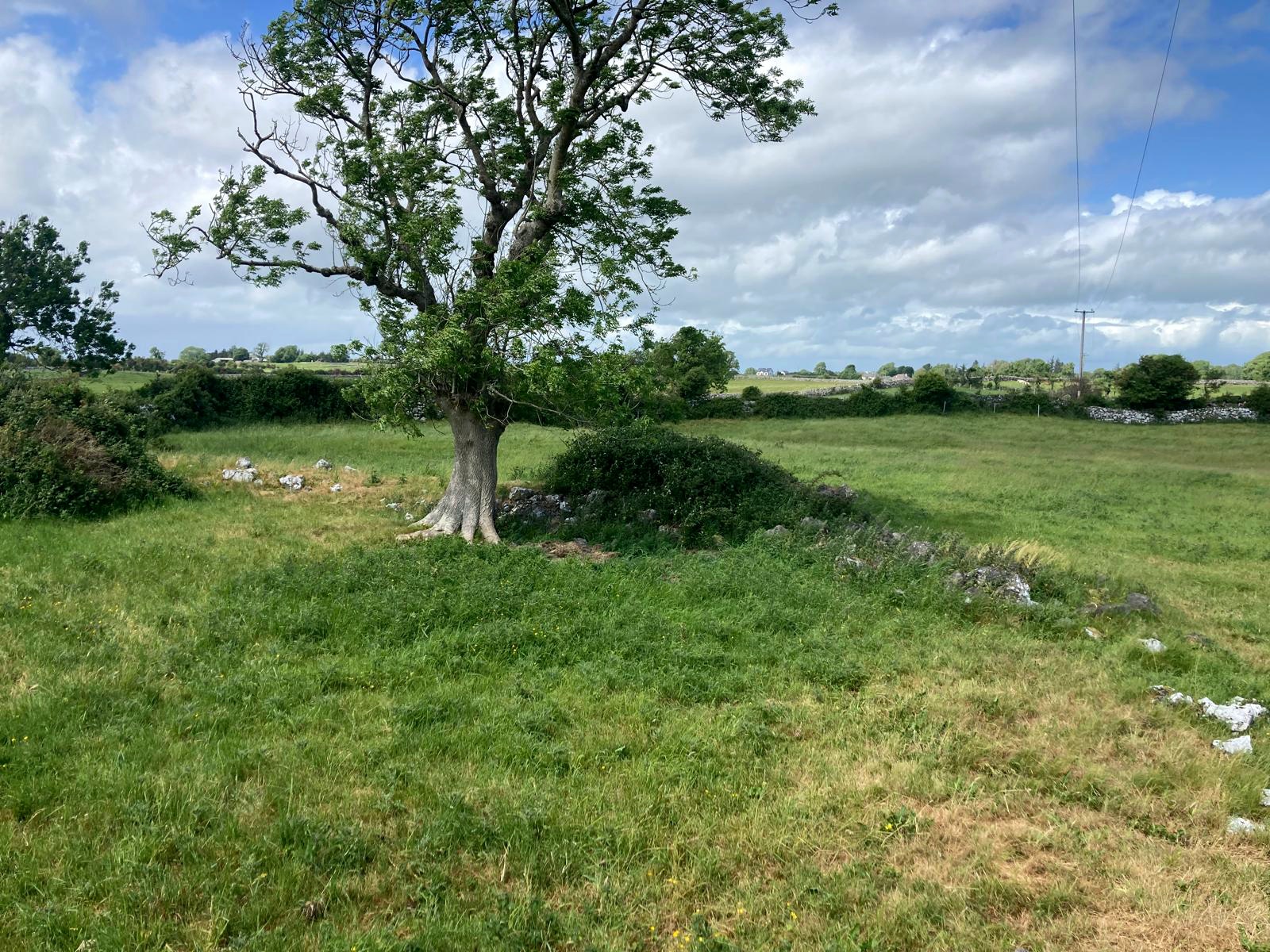
According to the National Monuments Service there is a massrock and two poorly preserved ringforts in Ballycolgan, as well as a church and burial that are no longer extant.
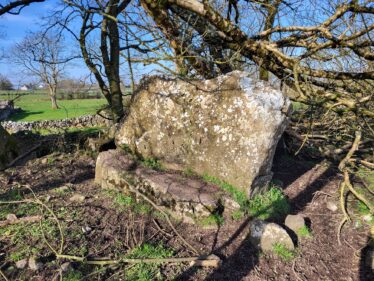
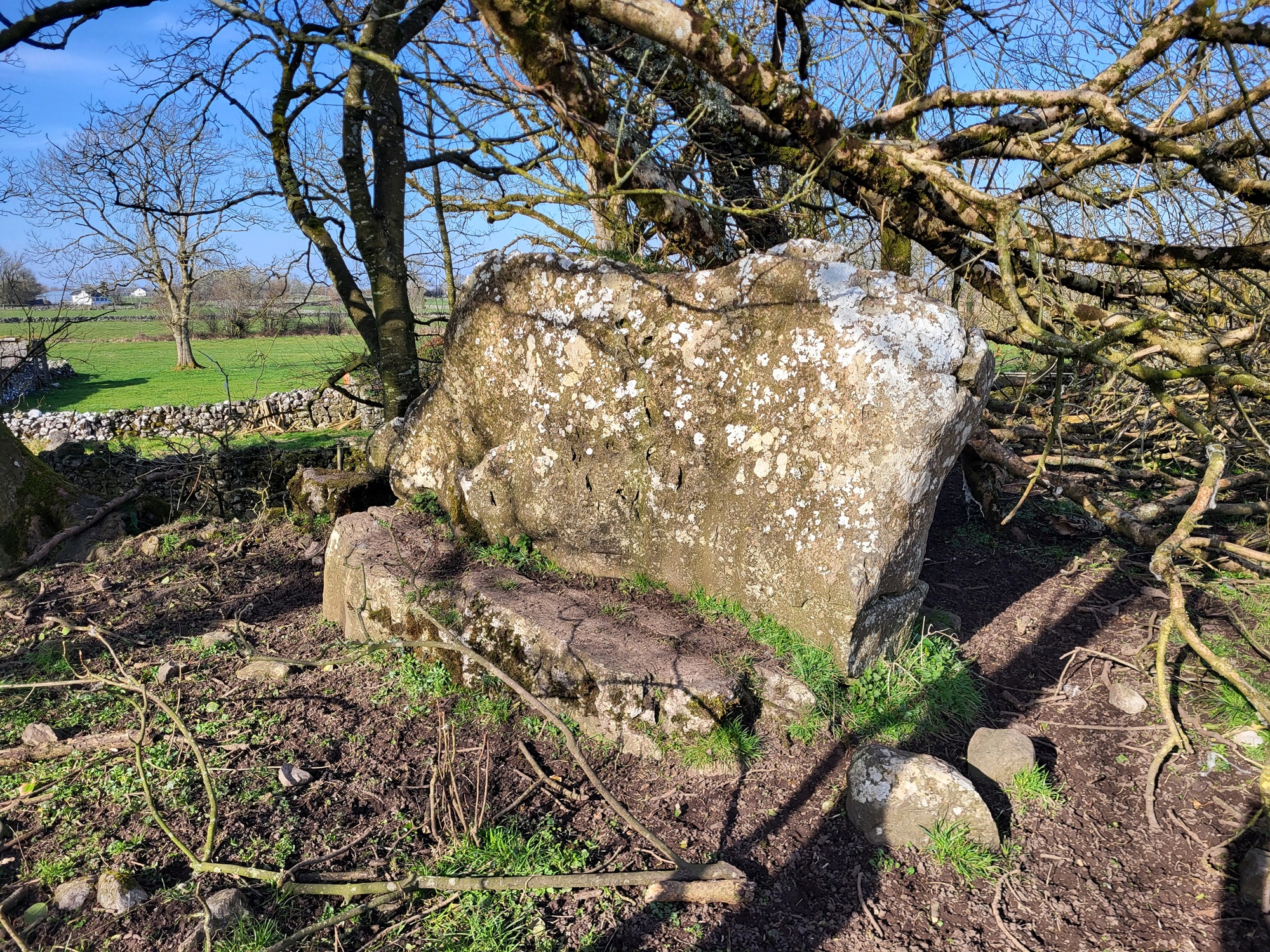
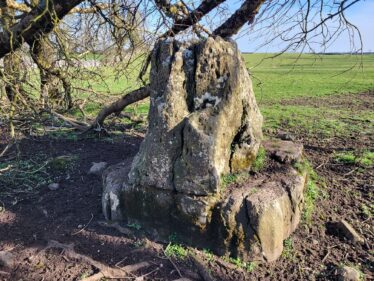
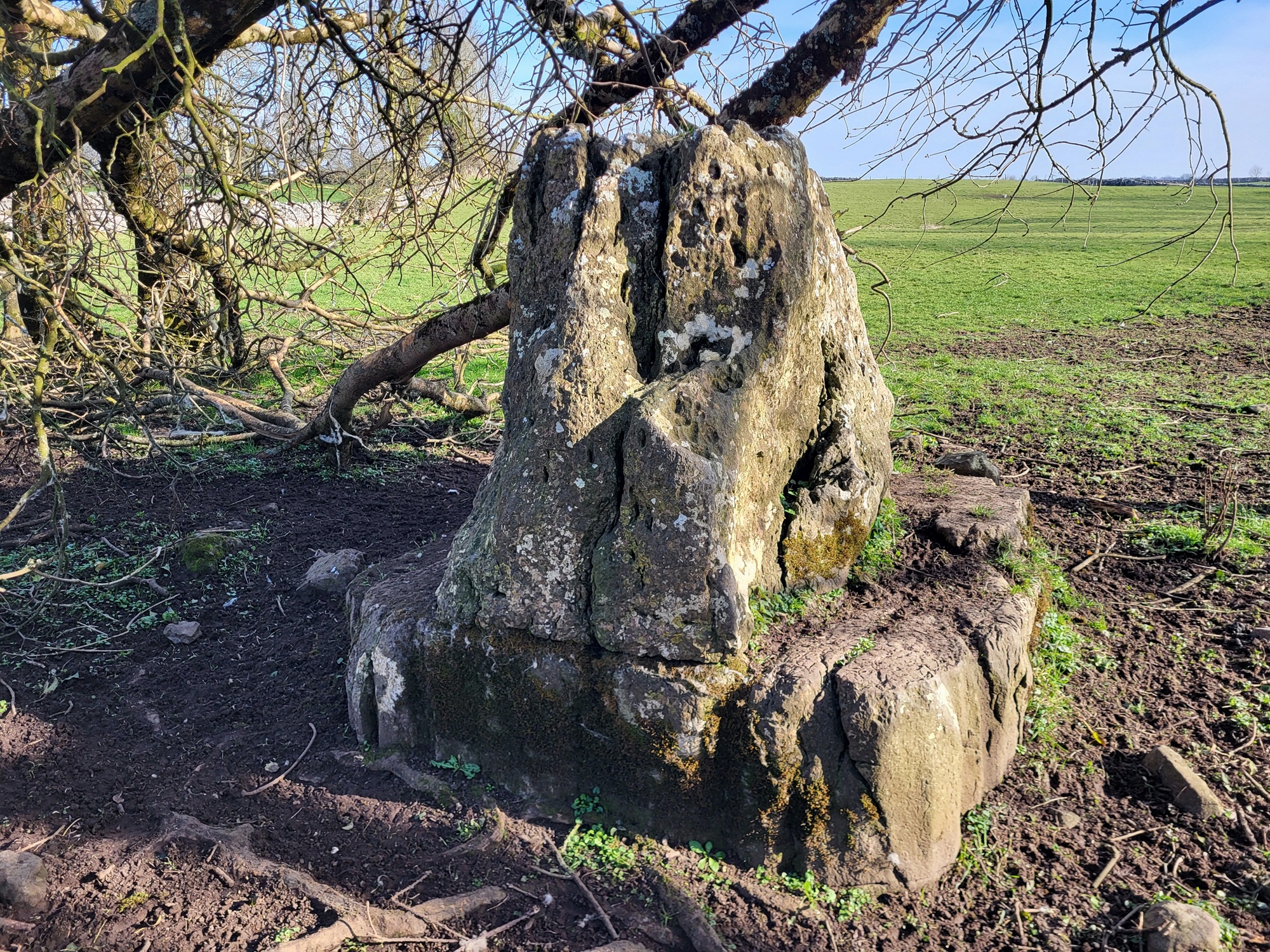
Mass-Rock (GA042-017—-)
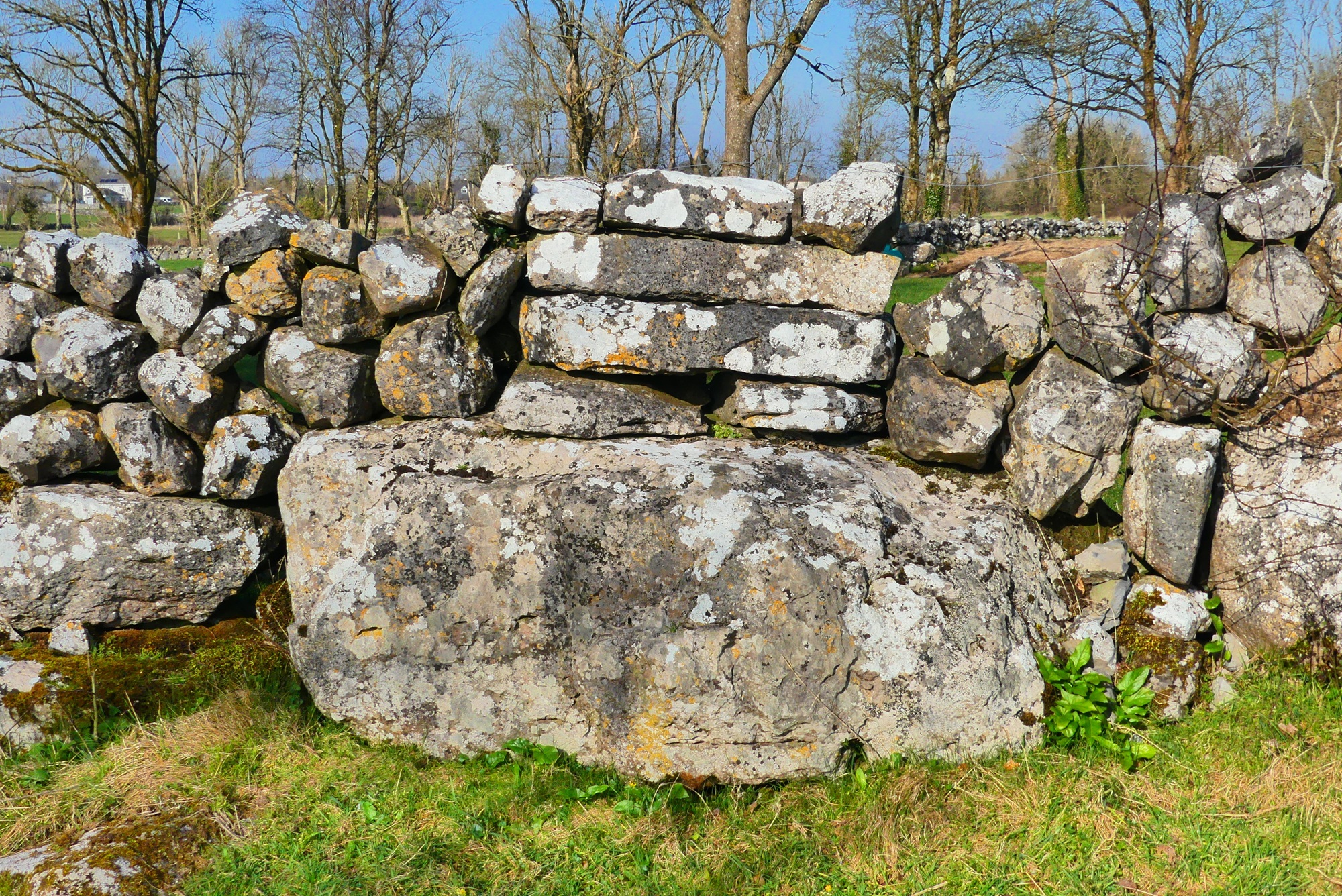
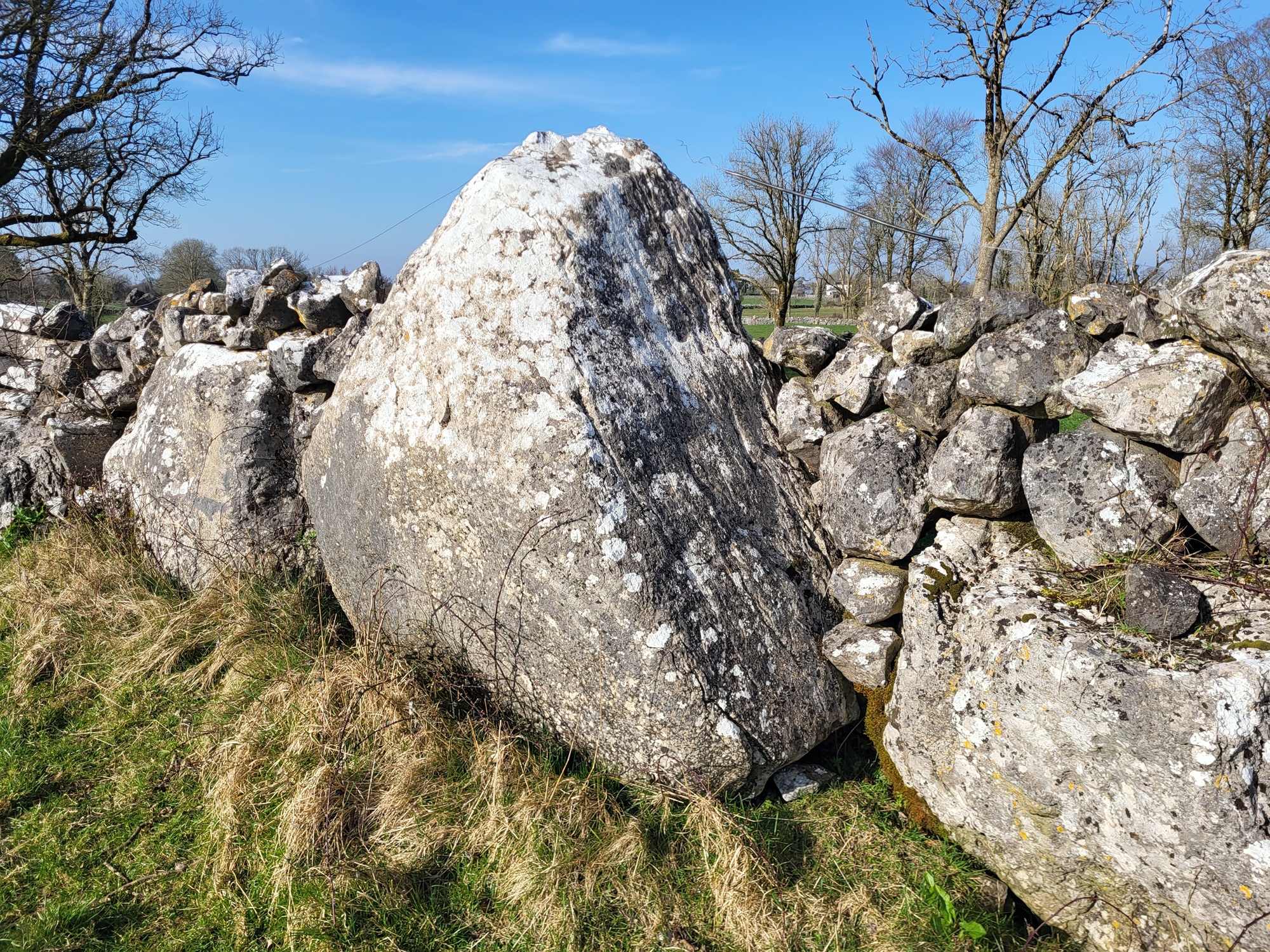
Situated under the treeline at the foot of a field beside a ruinous lime kiln, this large stone is distinctive in shape, with space for kneeling or standing at each side. It sits above a stone wall made of both small and large bolders, and there are other very large rocks built into a field wall close by, as well as several rectangular stones stacked in a pile.
Church (GA042-017001)
In grassland. According to local tradition, there was a ‘old church’ known as ‘St Patrick’s’ here. Its memory is preserved in the name of a nearby house marked on 3rd ed. of OS 6-inch map (1920) as ‘St. Patrick’s’. No visible surface trace survives. Some massive boulders in the vicinity may have been part of it. A mass rock (GA042-017—-) lies close by.
Caherduff Ringfort – Cashel (GA042-015—-)
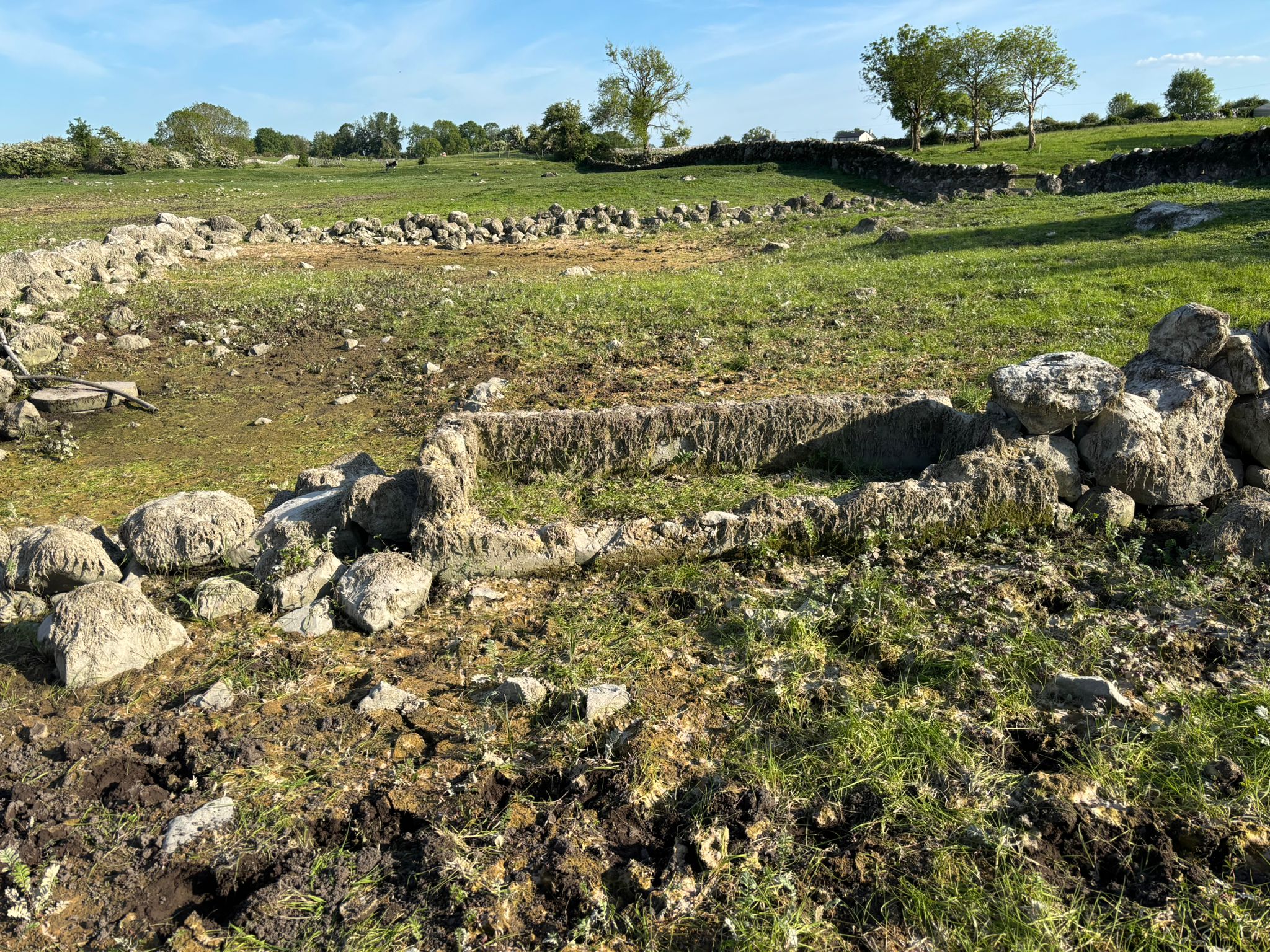
Situated on a rise in gently undulating grassland. A poorly preserved circular cashel (D 31m) defined by a drystone wall from north-west through noth to south-east; field-clearance rubble overlies the enclosing element at north-west and south-east. A field wall cuts the monument at north-west and south-east and the cashel wall only survives intermittently to the south west of it.
Caher Ringfort – Cashel (GA042-014—-)
On a hummock in grassland overlooking a lake to the east. A poorly preserved circular ringfort (D 32m) defined by low bank of earth and stone from east through south to west; no visible surface trace survives elsewhere.
Burial (GA042-018—-)
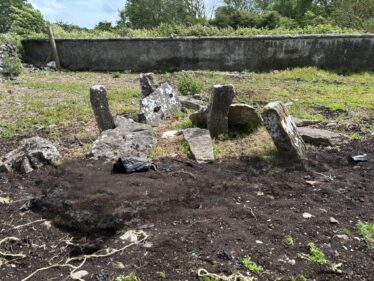
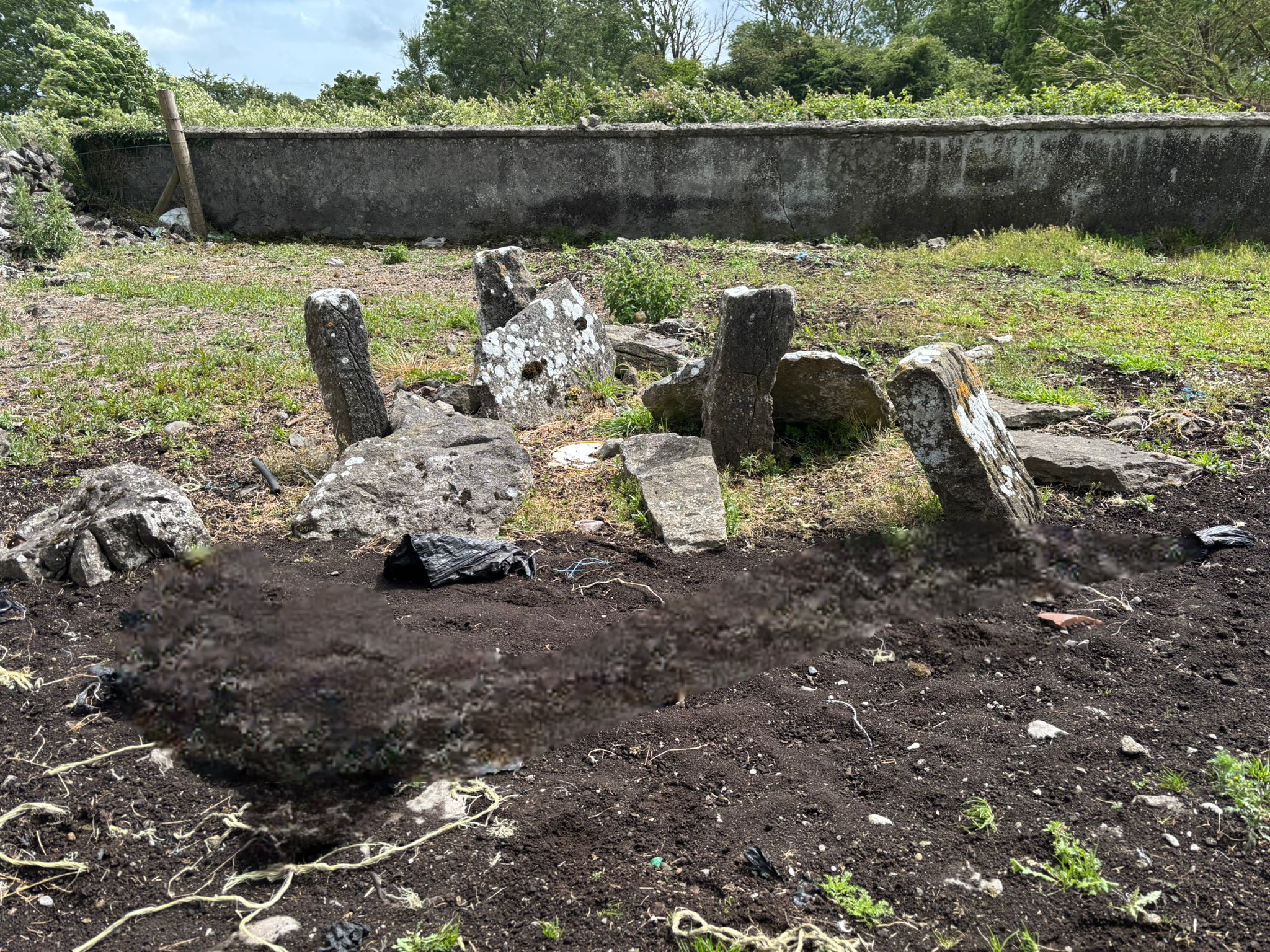
On a slight rise in grassland. Uncovered by the landowner during field clearance in 1984. Four stones set on edge formed a rectangular ‘box-like’ structure which was roofed with a large capstone. Thought to have contained pottery. No visible surface trace survives.
Mass rock excluded, the above descriptions are all derived from the published ‘Archaeological Inventory of County Galway Vol. II – North Galway’. Compiled by Olive Alcock, Kathy de hÓra and Paul Gosling (Dublin: Stationery Office, 1999). Date of upload: 05 August 2010
Other Historical Landmarks
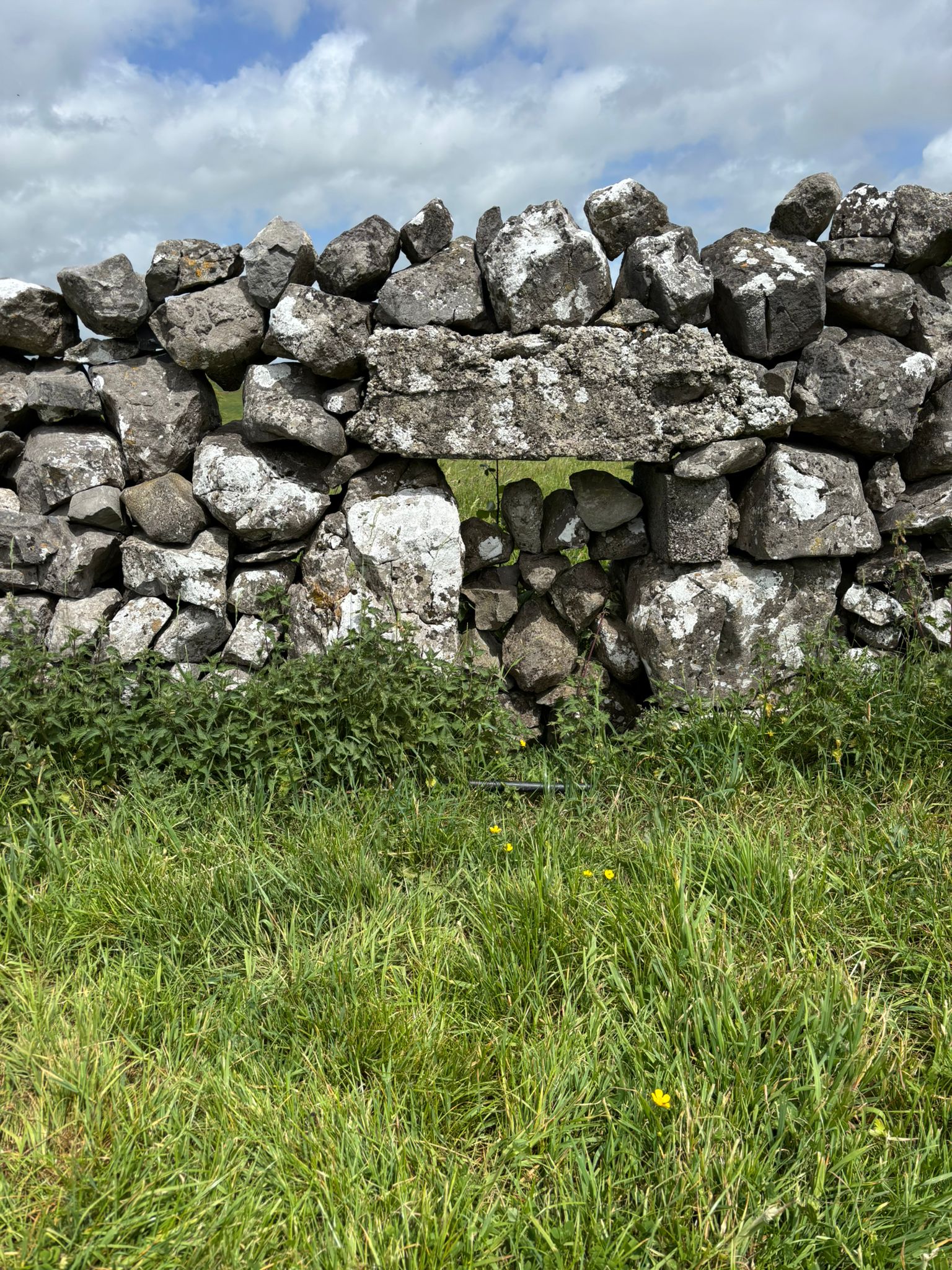
Not recorded on the National Monuments Service map, there is also at least one pooreen (Picture 6), one corn staddle in Ballycolgan (Picture 7) and a community well (Picture 8) in Ballycolgan townland.
A pooreen is a gap in a stone wall, purposely built to allow smaller livestock, like sheep, to graze freely between fields. A corn staddle was a set of stones used to support a framework upon which stacks of corn were kept to keep them safe from rodents.
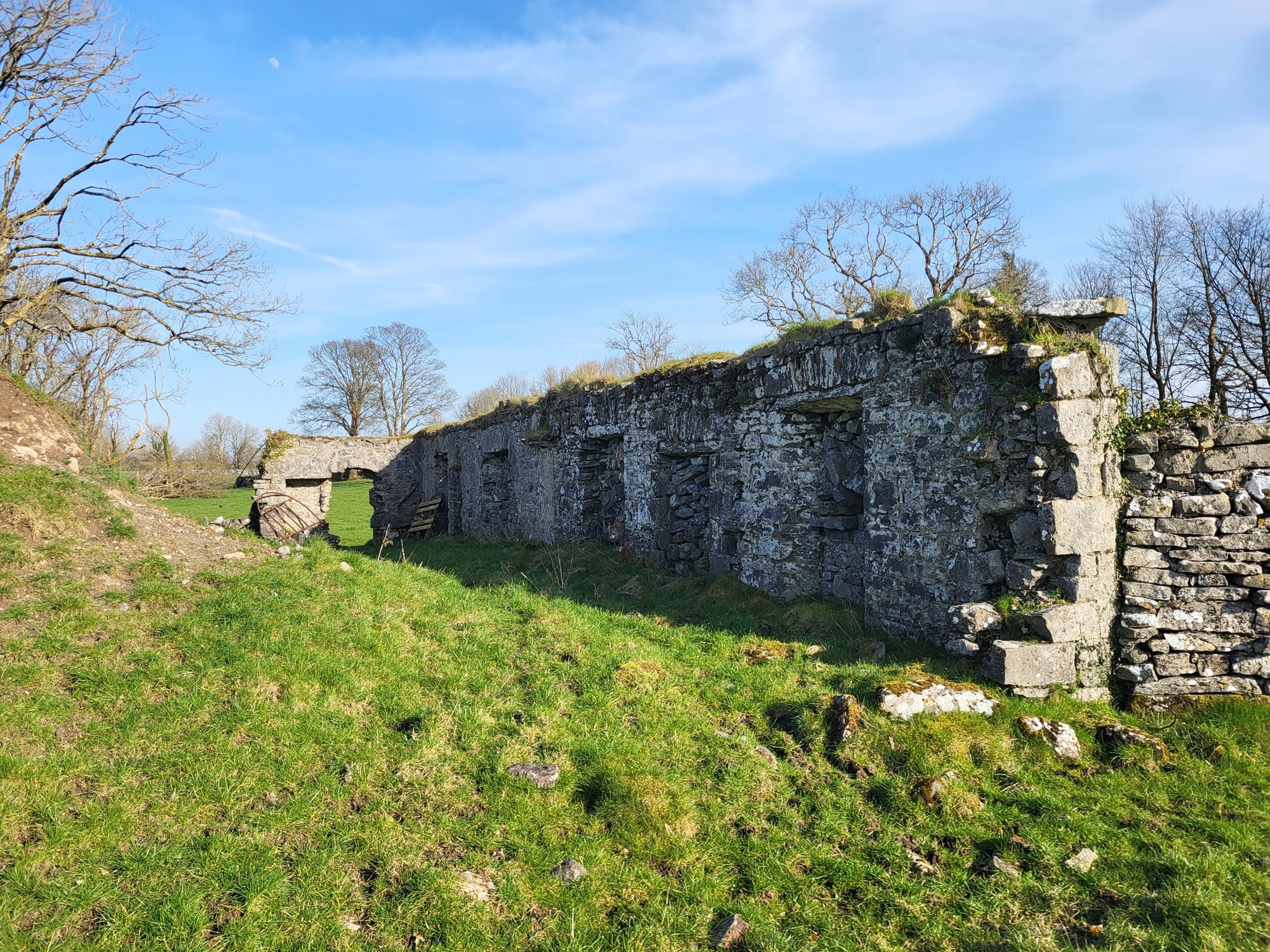
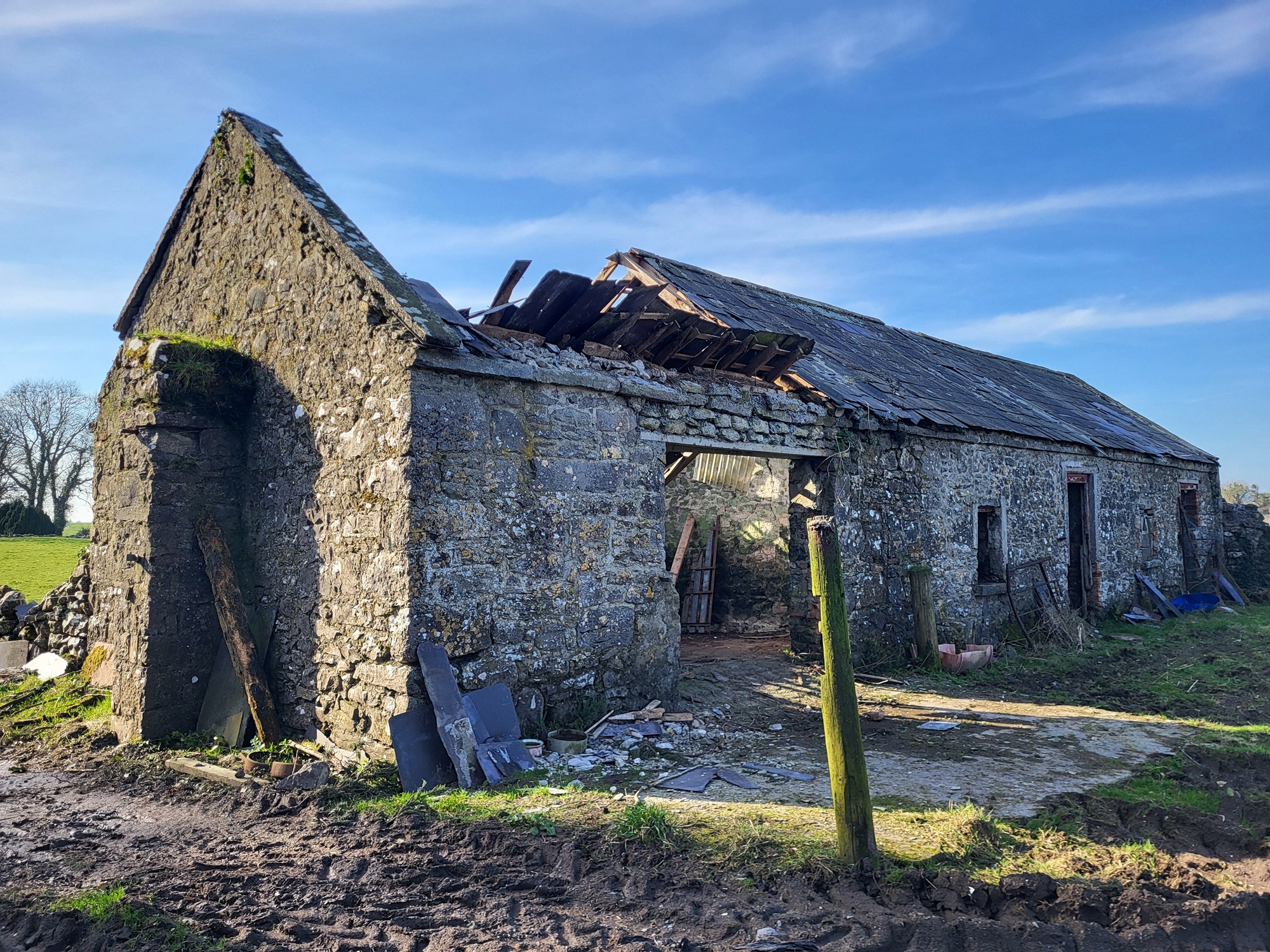
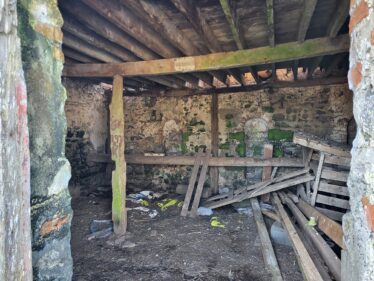
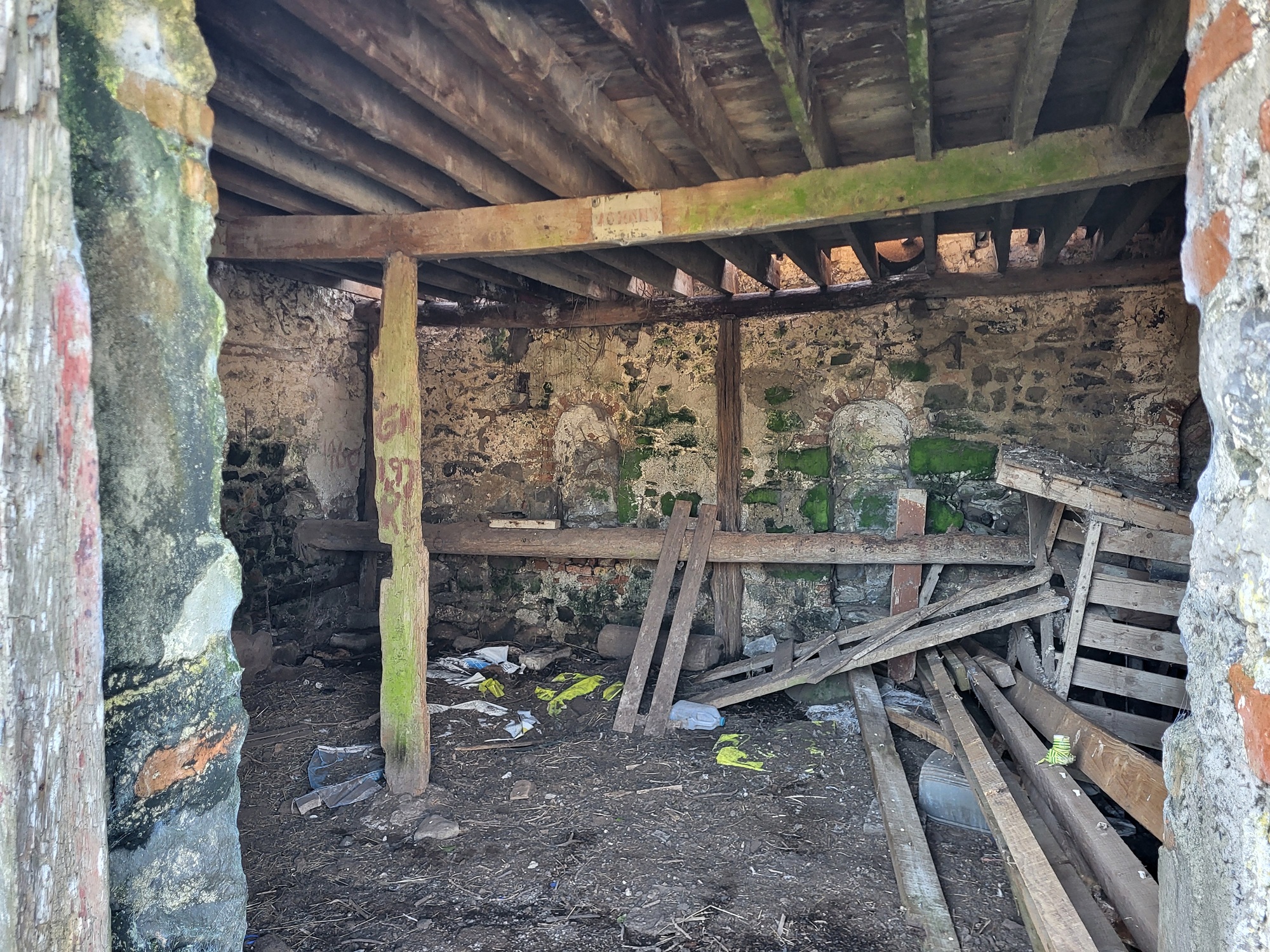
Also of note are the remains of the priest’s house and stables (Pictures 9-11) in Ballycolgan lower. According to locals, the house was originally a two-story Danish style thatch, although the front section of the ground floor is all that remains. Adjacent to this, the stables are in better repair, with original slate roof still intact. Inside the stables, the name plaques of the priest’s horses are still in place and read Johnny, Carrie and Topsy. The outline of a horse training ring is still visible in the front field.
According to The White Cannon’s (Higgins, McHugh: 1990), this house was the residence of Father John. Molloy (Parish Priest from 1804 to 1843), Father J. Loftus (P.P. from 1853 to 1861) and Father Patrick Heaney (P.P. from 1870 to 1903). The immediate predecessor to P.P. Heaney was Fr. John McCullagh who ‘refused to stay in the parish on the grounds that his residence in Ballycolgan was unsuitable and not safe’.
Father Patrick Molloy was best remembered for building the church at Corner Chapel, which was under construction for a number of years and completed in 1840. Father P.P. Heaney was the main driver for the construction of Caherlistrane Church, which after much fundraising, was opened to its first mass on Christmas day 1881.
Sources:
- The White Cannons – Abbeytown Cill-na-Manach – Ji Higgins M.A. and Anna McHugh (1990)
- National Monuments Service – Historic Environment Viewer
Please note: All of the monuments and historical sites listed here are on private property and should not be accessed or entered without prior permission from the landowner.
No Comments
Add a comment about this page