
Abbeytown (Baile na Mainistreach)
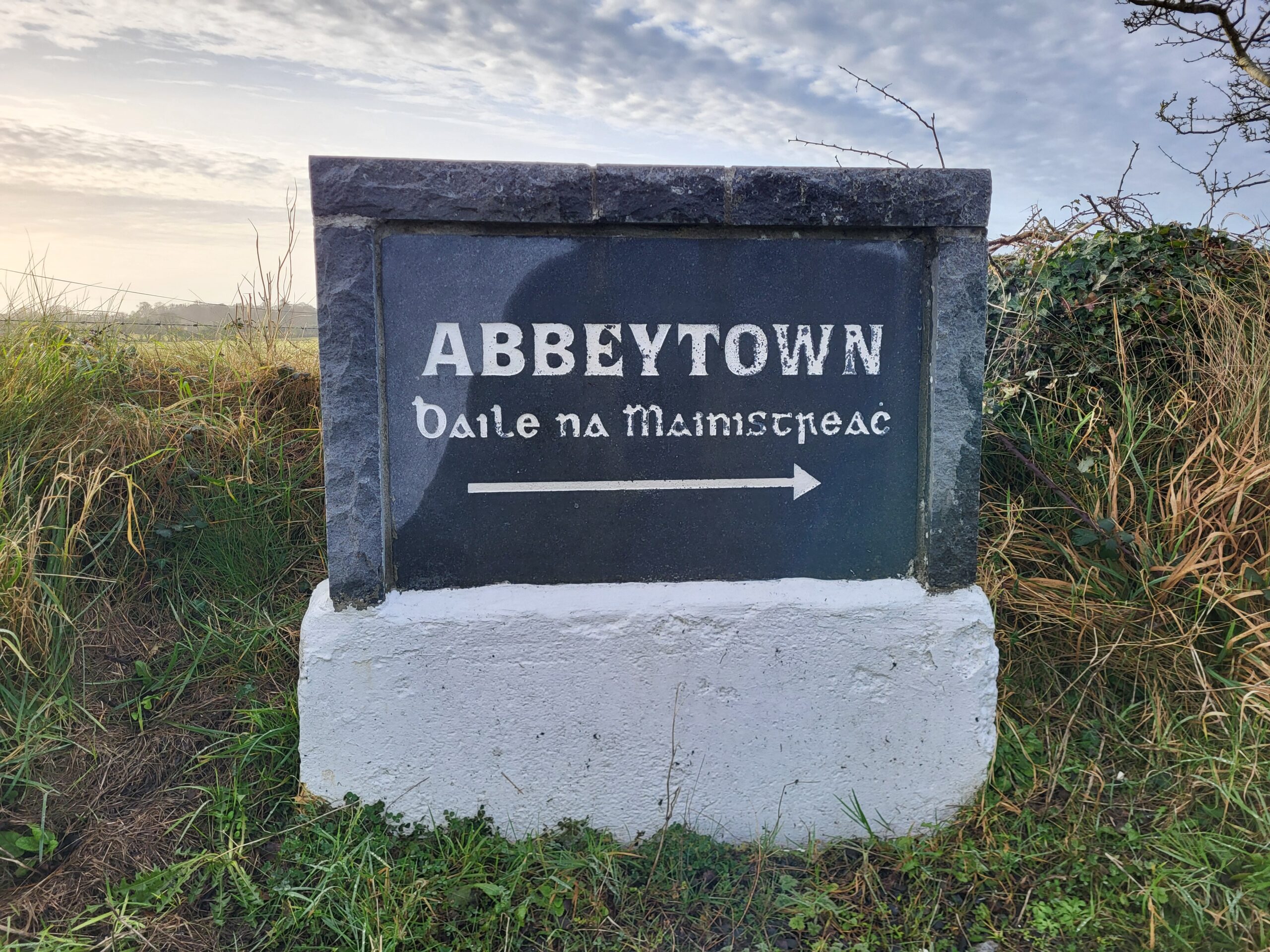
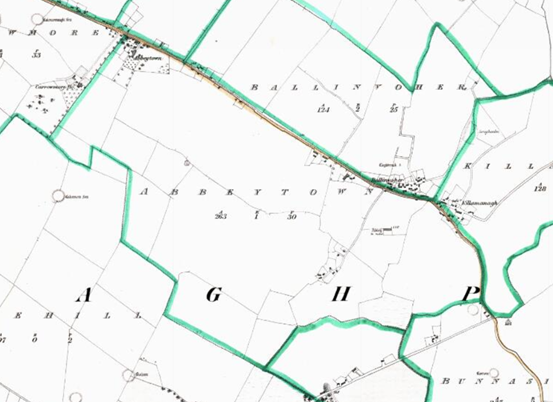
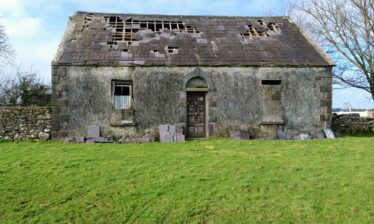
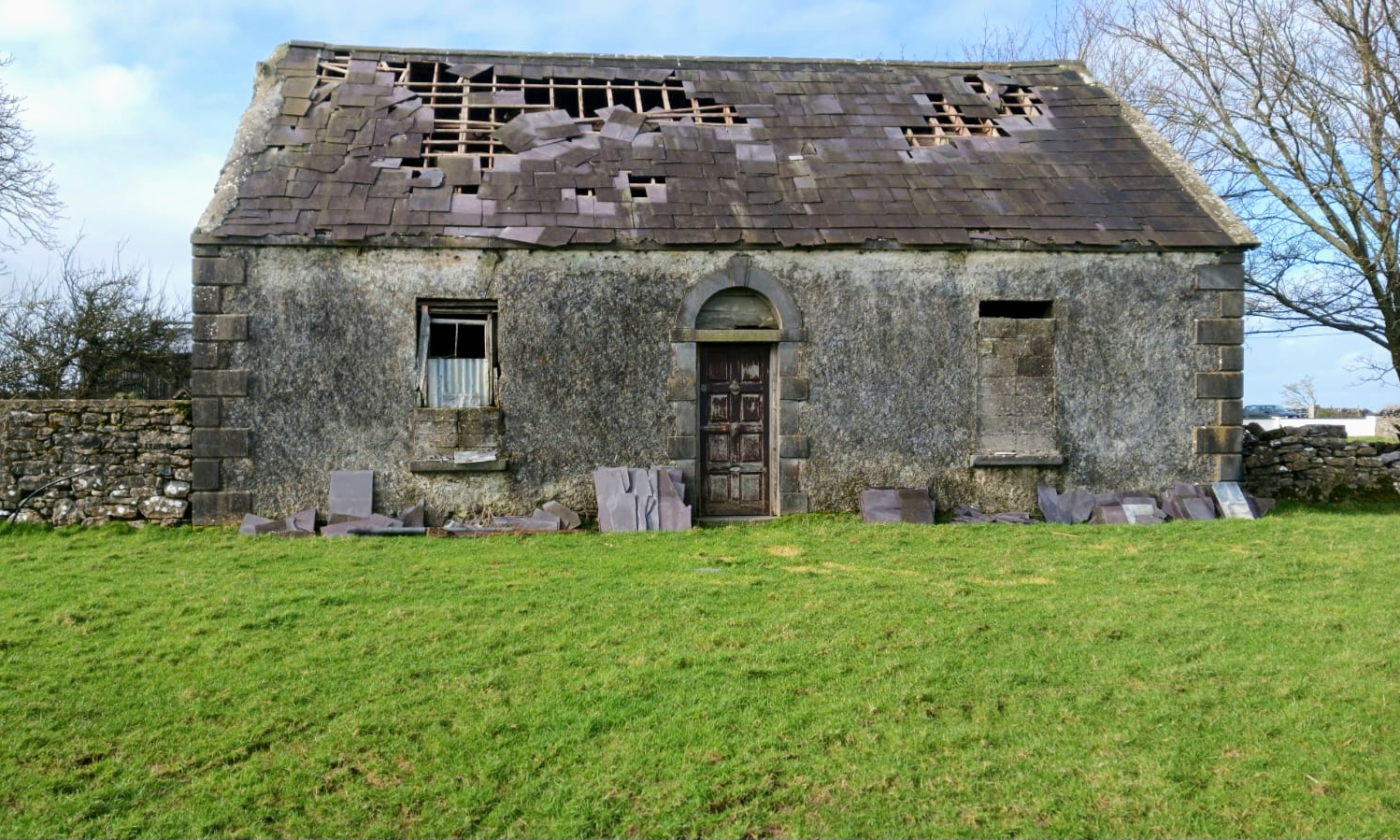
The name Abbeytown comes from the Irish Baile na Mainistreach, meaning the townland of the monastery. It is situated in the civil parish of Donaghpatrick, Barony of Clare. It is located in the east side of the parish and is bounded on the east by Ballinvoher, Bunnasillagh, Killamanagh and Lisdonagh, on the west by Carrowmore, Mirehill and Ralusk. (Source: Galway Library)
Irish name: Baile na Mainistreach
English name: Abbeytown
Meaning: The townland of the monastery
Baile: Townland Mainistir: Monastery
Area: 263 Acres, 1 rood, and 30 perches
Field names:
Civil Parish: Donaghpatrick
Barony: Clare
O’Donovan’s Field Name Books
As part of the Ordnance Survey of Ireland, from 1830 to 1842, John O’Donovan helped to collect and record the Irish form of townland names throughout the country. Information for each townland was collected and written into the Name Book along with information relating to land quality, crops and housing. (Source: Timeline Genealogy)
Other names: Baile na Mainistrech, Ballynamonastragh, Ballanamonistragh, Abbey of Killnamanagh
Description: The property of William Murphy, Esq., Dublin. Agent Thomas Burke, Carramore. Let to tenants at about 25 shillings per acre. Soil pretty good. Farms from 1 to 60 acres. Religion all Roman Catholics. Antiquities one site of Fort and the ruins of an old church called the Abbey of Abbeytown near the East corner of the townland. Agent Thomas Burke, Carramore.
Situation: A central townland bounded on the North by the townlands of Ballinvoher and Ralusk, West by Carrowmore, South by Mirehill, Lisdunna and Bunnasillagh and on the East by Killimannagh. In the Barony of Clare and County of Galway.
Information from the Ordnance Survey Letters: The Ordnance Survey Letters are letters between John O’Donovan and his supervisor, Thomas Larcom, regarding the work of compiling the Field Books. These letters provide further discussion on many of the places listed in the Field Books. References to Abbeytown can be found in the following letter.
“In the townland of Abbeytown about a mile to the north of this small lough ([In pencil:] Lough Hackett) are the ruins of a small abbey of which I have no record, nor does tradition afford any clue to its history.”
“I wish Mr. Curry would consult the live[s] of Patrick as given in the Leabhar Breac and the Book of Lismore, for the erection of Domhnach mor Muighe Seola, Siuil or Sealga. Perhaps the Colossi are called Cairthi or Liagain in Irish? I wish also to have all the references to the Hy-Briuin Seóla. It is generally but very (perhaps) [In left-hand margin: Cave!] erroneously supposed that they were located near Elphin. Mageoghegan’s map of Connaught is ridiculous; Lewis’s topographical Dictionary is scandalously incorrect about ancient territories. An English Bookseller sent a number of young Amadawns over here to write a history of hireland!
Your obt. Servt.
J. ODonovan.”
Other placenames in this townland:
Abbeytown House Situated in the N. side of townland Abbeytown.
Abbeytown Old Abbey In ruins with burying ground attached thereto. Situated in the townland of Abbeytown.
The Down Survey
The first national-scale survey of its kind in the world, the Down Survey, taken in the years 1656 -1658, sought to acurately map the land in Ireland in order to facilitate its transfer from Irish Catholics to English Protestants after the Cromwellian conquest.
1641 (pre-Cromwell) states that the owner(s) of the townland of Abbeytown was the Earl of Clanrickard (Protestant). The Down Survey map of 1670 (post-Cromwell) shows that the owner was still the Earl of Clanrickard (Protestant). (Source: Trinity College Dublin)
There is no information related to land area and quality.
Tithe Applotment Book 1826
The Tithe Applotment Books were compiled between 1823 and 1837 in order to determine the amount which occupiers of agricultural holdings over one acre should pay in tithes to the Church of Ireland. The land was measured in Irish acres, or plantation acres at the time. This equated to 1.698 English acres.
There were no records found for Abbeytown.
1851 Old Age Pension Census Search Forms
One name from Abbeytown appears on the 1851 Old Age Pension Census Search Forms.
Mary Walsh, daughter of John and Kate Walsh, Abbeytown. (Source: National Archives)
Valuation Office Books 1824-1856: House & Field Books
The valuation of Ireland was a cadastral survey made for the purpose of levying tax on property. A valuation price was put on every piece of property in the country and this became the basis on which local tax was charged, at a rate per pound of valuation. (Source: National Archives)
The 1843 Field Books show the following as a land occupier in Abbeytown on 03 August 1843: Martin Kirwan. (Source: National Archives)
Martin Kirwan occupied a house and offices with a value of £5 and 8 shillings.
The amount of land valued in Abbeytown was 263 Acres, 1 rood, and 30 perches which was valued at £175 and 16 shillings.
In 1845 the Field Books shows the following as land occupiers in Abbeytown: Martin Kirwan (11 June), Michael Roache (14 June) and John Burke (14 June). (Source: National Archives)
Martin Kirwan occupied a house and offices with a value of £5 and 8 shillings.
The total amount of land valued in Mirehill was 263 Acres, 1 rood, and 30 perches which was valued at £193 and 2 shillings and 8 pence.
There was also a graveyard in Abbeytown that measured 1 rood and was valued at 1 shilling and 10 pence. However, the graveyard was considered exempt. The valuator was David Williamson.
Michael Roche occupied a house that included a barn, cow house, car house and stables which had a valuation of £7 and 16 shillings and 4 pence.
John Burke occupied a house that included a barn, car house and stables which, after a number of deductions had a valuation of £4 and 16 shillings and11 pence. The valuator was David Williamson.
In 1854 the House Books shows the following as house occupiers in Abbeytown: Michael Roache, John Breheny, Michael Walsh, James Walsh, Patrick Bookin, Catherine Burke, Patrick Kyne, Mary Walsh, Bridget Carter, Mary Grogan and Peter Minaghan (all 24 February 1854).
Michael Roache occupied a house and offices with an initial valuation of £7 and 16 shillings and 4 pence which was reduced to £4. John Breheny occupied a house and offices with an initial valuation of £1 and 6 shillings which was reduced to 13 shillings. Michael Walsh occupied a house with an initial valuation of 18 shillings which was reduced to 10 shillings. James Walsh occupied a house and offices with an initial valuation of £1 and 16 shillings which was reduced to 18 shillings. Patrick Bookin occupied a house and offices with an initial valuation of £1 and 18 shillings which was reduced to £1. Catherine Burke occupied a house and offices with an initial valuation of £4 and 13 shillings which was reduced to £2 and 5 shillings. Patrick Kyne occupied a house and offices with an initial valuation of £3 and 2 shillings which was reduced to £1 and 10 shillings. Mary Walsh occupied a house with an initial valuation of 8 shillings which was reduced to 4 shillings. Bridget Carter occupied a house; however, no valuation was given. Mary Grogan occupied a house with an initial valuation of 7 shillings which was reduced to 4 shillings. Peter Minaghan occupied a house with an initial valuation of 4 shillings which was reduced to 3 shillings.
1855 Griffith’s Valuation
Between 1847 and 1864, Richard Griffith was responsible for carrying out the Primary Valuation of Tenements (generally referred to as Griffith’s Valuation because of his role in the project). The aim of the valuation was to produce a uniform guide to the relative value of land throughout the whole of Ireland in order to decide liability to pay the Poor rate (for support of the poor and destitute within each Poor Law Union). The project required Griffith and a team of valuers to determine the value of every piece of land and property in the country enabling every occupiers’ tax due to be assessed. The information they collated covering all 32 counties was compiled into over 300 volumes and published over a period of 17 years. (Source: Find My Past)
Griffith’s Valuation records the following occupiers in Abbeytown as Michael Roche, John Breheny, Michael Walsh, James Walsh, Patrick Bowen, Catherine Burke and Patrick Kyne. (Source: Ask About Ireland)
Michael Roche occupied a house and offices with lands totalling 63 acres and 8 perches which had a valuation of £39, the buildings had a valuation of £4.
John Breheny, Michael Walsh, James Walsh, Patrick Bowen, Catherine Burke and Patrick Kyne of land totalling 200 acres and 22 perch. The valuation of the land occupied by John Breheny was £3 and 10 shillings, in addition, John Breheny occupied a house and offices with a valuation of 10 shillings. The valuation of the land occupied by Michael Walsh was £3 and 10 shillings, in addition, Michael Walsh occupied a house with a valuation of 5 shillings. The valuation of the land occupied by James Walsh was £11 and 10 shillings, in addition, James Walsh occupied a house and offices with a valuation of 15 shillings. The valuation of the land occupied by Patrick Bowen was £11 and 10 shillings, in addition, Patrick Bowen occupied a house and offices with a valuation of 15 shillings. The valuation of the land occupied by Catherine Burke was £69 and 10 shillings, in addition, Catherine Burke occupied a house and offices with a valuation of £1. The valuation of the land occupied by Patrick Kyne was £27 and 10 shillings, in addition, Patrick Kyne occupied a house and offices with a valuation of £1 and 10 shillings.
The immediate lessor for all properties recorded in the Griffith’s Valuation for Abbeytown was Rep. John W. Murphy.
Petty Session Court Register 1818-1919
There was one instance in the Petty Sessions record pertaining to a resident of Abbeytown.
Defendant Hugh McGrath with complainant ST Patrick Davis RIC Shrule and witnesses Const. Cleudin and J.C. Davis, was charged with ‘two pigs wandering on the public road at Tonacoolin in said county on the 28th day of January 1879.’ Mr McGrath was fined one shilling with a shilling cost. (Source: Petty Sessions Order Books CSPS 1/9878).
Population Statistics
The following statistics are from the census return records from 1842 to 1891 and the National Archives census returns for 1901 and 1911. (Source: Histpop)
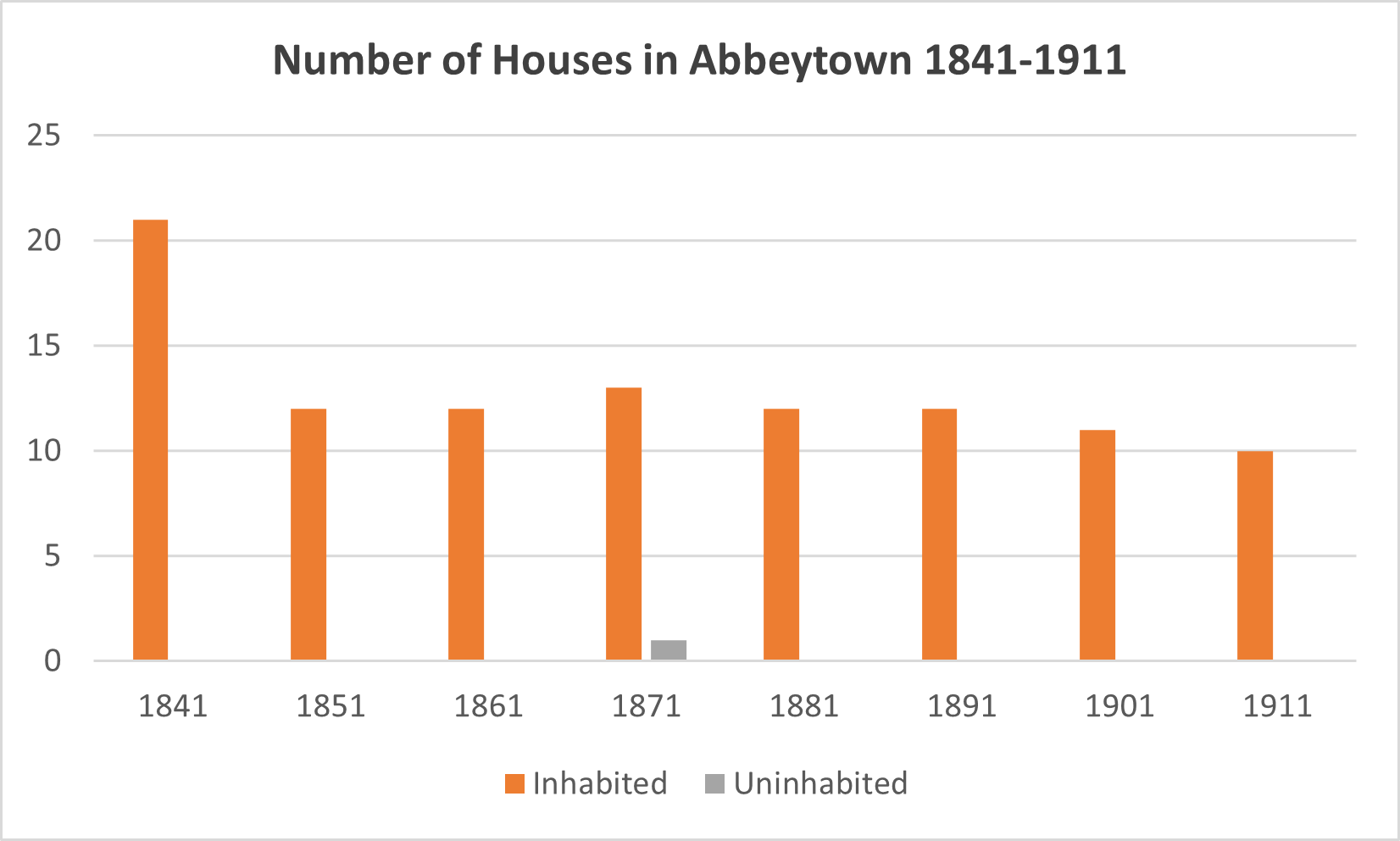
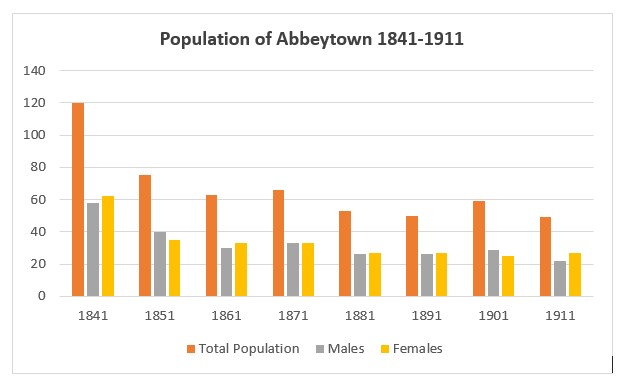
1841: 21 houses, 120 people (58 males and 62 females)
1851: 12 houses, 75 people, (40 males and 35 females)
1861: 12 houses, 63 people (30 males and 33 females)
1871: 13 houses (incl. 1 unoccupied), 66 people (33 males and 33 females)
1881: 12 houses, 53 people (26 males and 27 females)
1891: 12 houses, 50 people (23 males and 27 females)
1901: 11 houses, 59 people (29 males and 25 females)
1911: 10 houses, 49 people (22 male and 27 female)
1901 Census
The 1901 Census of Ireland records the following 54 individuals living in 11 households in Abbeytown. (Source: National Archives)
1. Patrick Kyne (30) lived with his wife Katie T. (26), daughters, Mary G. (2), Josephine A. (1), Lillian F. (1 month), male servant, John Lee (20), female servants, Mary Hynes (19) and Maggie Flanagan. All householders were born in Co Galway and all were Roman Catholic. Patrick Kyne’s occupation was listed as a Farmer. Katie T.’s occupation was listed as Farmer’s Wife. Mary G., Josephine A. and Lillian F. Kyne’s occupation was listed as a Farmer’s Daughter. John Lee, Mary Hynes and Maggie Flanagan’s occupation was listed as Farm Servant. All householders could read and write with the exception of Mary G., Josephine A. and Lillian F. All householders could speak Irish and English with the exception of Mary G., Josephine A. and Lillian F.
2. John Bohan Sr. (57) lived with his wife Margret (47), sons, Pat (21), John Jr. (9), daughters, Delia (16), Nora (14) and Margaret (12). All householders were born in Co Galway and all were Roman Catholic. John Sr’s occupation was listed as a Farmer. Margaret’s occupation was listed as a House Keeper. Pat’s occupation was listed as Farmer’s Son. The remaining householders were listed as scholars. All householders could read and write. All householders could speak Irish and English.
3. James Walsh (48), unmarried, was born in Co Galway and was a Roman Catholic. James’ occupation was listed as a Farmer. James could read and write and could speak both Irish and English.
4. Patrick Walshe (82) lived with his wife Bridget (80), Son in Law, John Kyne Sr. (35), daughter Mary Kyne (34), granddaughters Anne (12), Delia (10), Winefred (9), grandsons Patrick (7), John Jr. (5), Martin (3), Charles (1), Peter (1) and male servant John Myres (21). All householders were born in Co Galway and all were Roman Catholic. Patrick Walshe and John Kyne Sr’s occupation was listed as a Farmer. Bridget Walsh and Mary Kyne’s occupation was listed as a Farmer’s Wife. Martin, Charles and Peter Kyne were listed as Farmer’s Son. Anne, Delia, Winefred, Patrick and John Jr. were listed as scholars. John Myers’ occupation was listed as a Farm Servant. Patrick Walshe, Mary, Anne, Delia, Winefred, Patrick and John Kyne Sr. could read and write. Patrick Walshe, Mary, Anne, Delia and John Kyne Sr. and John Myers could speak both Irish and English.
5. John Walsh (70) a widower, lived with his sons Michael (34), Thomas (28), daughters Mary (36) and Bridget (24). All householders were born in Co Galway and all were Roman Catholic. John’s occupation was listed as a Farmer. Michael and Thomas’ occupation was listed as Farmer’s Son. Mary’s occupation was listed as a Farmer’s Daughter. Bridget’s occupation was listed as a Dressmaker. All householders could read and write. All householders could speak Irish and English.
6. John Breheny (80) a widower, lived with his son Michael (30) and daughter Mary (34). All householders were born in Co Galway and all were Roman Catholic. John’s occupation was listed as a Farmer. Michael’s occupation was listed as Farmer’s Son. Mary’s occupation was listed as a Farmer’s Daughter. All householders could read and write with the exception of Michael who could read only. All householders could speak Irish and English.
7. Michael Cunningham Sr. (50) lived with his wife Norah (41), sons Michael Jr. (14), John (12), Thomas (10), Peter (8) and daughter, Mary (6). All householders were born in Co Galway and all were Roman Catholic. Michael Sr’s occupation was listed as a Farmer. Norah’s occupation was listed as a Farmer’s Wife. Michael Jr., Thomas, John and Peter’s occupation was listed as Farmer’s Son. Mary’s occupation was listed as a Farmer’s Daughter. All householders could read and write with the exception of Mary who could read only. Michael Sr. and Norah could speak both Irish and English.
8. Henry Kyne (43) lived with his wife Nora (47), daughter Delia (8) and male servant Michael McDonagh (17). All householders were born in Co Galway and all were Roman Catholic. Henry’s occupation was listed as a Farmer. Nora’s occupation was listed as a Farmer’s Wife. Delia was listed as a Scholar. Michael McDonagh’s occupation was listed as an Agricultural Labourer. All householders could read and write. All householders could speak Irish and English with the exception of Delia who spoke English only.
9. Patrick Myres (55) lived with his wife Mary (53) and son Patt (15). All householders were born in Co Galway and all were Roman Catholic. Patrick and Patt’s occupation was listed as a Labourer. Mary was listed as a Labourer’s Wife. None of the householders could read or write. All householders spoke Irish only.
10. John Walsh (62) lived with his wife Kate (40). Both householders were born in Co Galway and both were Roman Catholic. John’s occupation was listed as a Labourer. Kate was listed as a Labourer’s Wife. Kate could read and write. Kate could speak both Irish and English while John spoke Irish only.
11. Catherine Grogan (60), a widow, was born in Co Galway and was a Roman Catholic. Catherine’s occupation was listed as being On Outdoor Relief. Catherine could not read or write but could speak both Irish and English.
There were four second class houses, five third class houses and two fourth class houses. Two second class houses had either a slate, iron or tiled roof, the other ten houses had a roof of thatched, wood or other perishable material. All houses had walls constructed of either brick, stone or concrete. One second class house had five front windows, one with four front windows and two with three front windows. Two third class house had two front windows and three with one front window, two fourth class houses with no front windows. There were seven stables, seven cow houses, seven calf houses, seven piggeries, six fowl houses, seven barns and one potato house.
1911 Census
There were 10 houses in Abbeytown with a total of 49 individuals recorded in the 1911 Census of Ireland. (Source: National Archives)
1. Henry Kyne (52) lived with his wife of 17 years Norah (55), daughter Delia Moran (18), male servants John Burke (19) and Patt Conneely (45) and female servant Mary Cavanagh (19). All householders were born in Co Galway and all were Roman Catholic. Henry’s occupation was listed as a Farmer. John Burke and Patt Conneely’s occupation was listed as General Servant. Mary Cavanagh’s occupation was listed as a Domestic Servant. No occupation was listed for Norah Kyne or Delia Moran. All householders could read and write. All householders could speak Irish and English. Henry and Norah had 1 child who was still living in 1911. Delia Moran had been married for 1 year in 1911.
2. Patrick Myres (77) who lived with his wife of 46 years Mary (74). Both householders were born in Co Galway and both were Roman Catholic. Patrick’s occupation was listed as an Agricultural Labourer. No occupation was listed for Mary. Neither householder could read or write. Both householders could speak Irish and English. Patrick and Mary had 6 children, 4 of whom were still living in 1911.
3. Patrick Kyne Sr. (38) who lived with his wife of 13 years Kate (36), daughters Josephine (10), Lilian (9), Kathleen (7), Aileen (6), Florence (5) and Violet (4), son Patrick Jr. (1), male servant, Michael Forde (23) and female servant Mary Dempsey (19). All householders were born in Co Galway and all were Roman Catholic. Patrick Sr’s occupation was listed as a Farmer. Josephine, Lilian, Kathleen, Aileen and Florence were listed as scholars. Michael Forde and Mary Dempsey’s occupation was listed as Domestic Servant. No occupation was listed for Kate, Violet and Patrick Jr. All householders could read and write with the exception of Violet and Patrick Jr. All householders could speak Irish and English. Patrick Sr. and Kate had 8 children, all of whom were still living in 1911.
4. John Bohan (66) who lived with his wife of 40 years Margaret (64), daughters Nora (22) and Maggie (20), and son John (18). All householders were born in Co Galway and all were Roman Catholic. John’s occupation was listed as a Farmer. No occupation was listed for the other householders. All householders could read and write. All householders could speak Irish and English. John and Margaret had 9 children, all of whom were still living in 1911.
5. James Walsh (75), unmarried, was born in Co Galway and was a Roman Catholic. John’s occupation was listed as a Farmer. John could read and write and could speak both Irish and English.
6. John Kyne (47) who lived with his wife of 24 years Kate (46), daughters Mary Anne (23), Winnifred (20) and Nora Maria (6), sons Patrick J. (18), Martin (13), Charlie (11) and Eddie (9). All householders were born in Co Galway and all were Roman Catholic. John’s occupation was listed as a Farmer. Patrick J’s occupation was listed as Farmer’s Son. Nora Maria, Martin, Charles and Eddie were listed as scholars. No occupation was listed for Kate, Mary Anne and Winnifred. All householders could read and write. All householders could speak Irish and English. John and Kate had 10 children, all of whom were still living in 1911.
7. Michael Walsh (50) who lived with his wife of 5 years Bridget (30), sister, Mary (55), daughter Mary A. (2) and son Patrick (2 months). All householders were born in Co Galway and all were Roman Catholic. Michael’s occupation was listed as a Farmer. No occupation was listed for the other householders. All householders could read and write with the exception of Mary A. and Patrick. All householders could speak Irish and English with the exception of Mary A. and Patrick. Michael and Bridget had 3 children, all of whom were still living in 1911.
8. Michael Mohan (37) who lived with his wife of 14 years Bridget (56). Both householders were born in Co Galway and both were Roman Catholic. Michael’s occupation was listed as a Farmer. No occupation was listed for Bridget. Both householders could read and write. Both householders could speak Irish and English.
9. Michael Cunningham (62) who lived with his wife of 28 years Norah (53), sons John (24), Thomas (22) and Peter (20), and daughter Julia (10). All householders were born in Co Galway and all were Roman Catholic. Michael’s occupation was listed as a Farmer. John, Thomas and Peter’s occupation was listed as Farmer’s Son. Julia was listed as a Scholar. No occupation was listed for Norah. All householders could read and write. All householders could speak Irish and English. Michael and Norah had 7 children, all of whom were still living in 1911.
10. Catherine Grogan (74) a widow, who lived with her granddaughter Norah Walsh (13). All householders were born in Co Galway and all were Roman Catholic. Catherine’s occupation was not listed. Norah was listed as a Scholar. Norah could read and write. Both householders could speak Irish and English. Catherine had been married for 48 years and had 5 children, 3 of whom were still living in 1911.
There were five second class houses and five third class houses, one second class house had either a slate, iron or tiled roof, the other nine houses had a roof of thatched, wood or other perishable material. All houses had walls constructed of either brick, stone or concrete. One second class house had five windows, one with four windows and three with three windows. One third class house had two windows and four with one window. There were seven stables, seven cow houses, three calf houses, six piggeries, six fowl houses, seven barns, two potato houses and five sheds.
No Comments
Add a comment about this page