
Townlands with Ecclesiastical Names
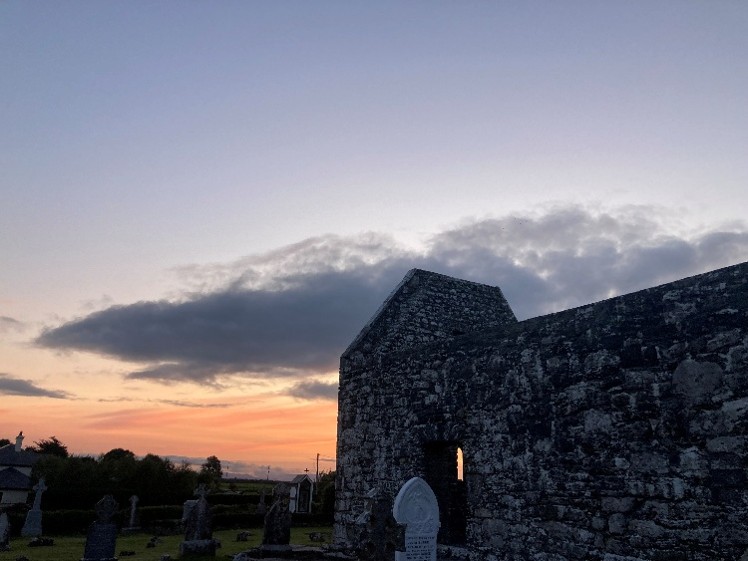
A number of townland names in the parish are associated with ecclesiastical sites and figures. Four of the townlands are named after a saint. Donaghpatrick, or St Patrick’s Church, is named after our national saint, Saint Patrick who is reputed to have build a church at the site of the current graveyard and church ruin in Donaghpatrick. Kilcoona, or the Church of Cuana, is named after St Cuana who founded his church at the site of the current cemetery and ecclesiastical ruins, including a partially built round tower in Kilcoona townland. Two further townlands derive their names from saints. These are Kilkilvery, or the Church of Cilbhire, and Kilwullaun, or Church of Mothlán, however, no trace of either ecclesiastical site survives.
Abbeytown comes from the Irish Baile na Mainistreach, meaning the townland of the Monastery. Abbeytown is the site of a Premonstratensian monastery founded in the 13th century (Higgins and McHugh, 1990). The neighbouring townland Killamanagh, translates as the Church of the monks/monastic tenants. This may actually refer to the Abbeytown site as there is no evidence of a monastic site in Killamanagh.
The townland of Crossursa, or Saint Fursa’s Cross is named for a standing stone that reputedly contains a cross linked to Saint Fursa (Fursey) who established a number of churches throughout Britain and Ireland, including Killursa outside Headford. There is also a sub-townland or village in Crossursa called Saint Patrick’s. There is some uncertainty regarding the meaning of the townland name Oltore. One theory is that it simply means altar. Oltore is the site of one of two known mass rocks in the parish, the other being in Ballycolgan. Mass rocks were used as clandestine altars by catholic priests during the 17th and 18th centuries when catholic mass was outlawed under the Penal Laws.
The townland of Glebe is named for a Glebe, which is church owned land and rectory used to support the local clergyman/clergywoman in the Anglican or Church of Ireland Church. The rectory in Glebe is still in situ. There are two townlands in the parish named Caltragh in Killower and Kilkilvery civil parishes respectively. The word Caltragh translates as The Churchyard or the Burial Ground, namely children’s burial grounds (CBG) where unbaptised children were buried. There is a CBG in Caltragh, Kilkilvery, while in Caltragh, Killower, a Cist burial contained the cremated bones of at least one adult and a child (Alcock, 1999).
Abbeytown – Baile na Mainistrech Townland of the Monastery
Kilcoona – Cill Cuanna Church of Cuana
Kildrum – Cill Droma Church of the Ridge
Donaghpatrick – Domhnach Pádhraig St Patrick’s Church
Kilkilvery – Cill Chilbhire Church of Cilbhire
Kilwullaun – Cill Mhothlan Church of Mothlán
Killamanagh – Cill na Manach Church of the monks/monastic tenants
Crossursa – Crois Fhursa St Fursa’s Cross
Glebe – An Ghléib Ecclesiastical land to support a clergyman
Oltore – Olltóir Altar (possibly)
Caltragh – An Chealtrach The Churchyard/Burial Ground
Caltragh – An Chealtrach The Churchyard/Burial Ground
References
Alcock, O., de hÓra, K., and Gosling, P. (1999) Archaeological Inventory of County Galway Volume II: North Galway. Dublin: Stationery Office
Higgins, J. and McHugh, A. (1990) The White Canons: Abbeytown, Cill-Na-Manach 1260-1990: A History of the White Canons and other Historical Places in the District of Maigh Seola. Galway: The Crow’s Rock Press
Ó Muraíle, N. (2020) ‘The Placenames of Cathair Loistreáin/Caherlustraun ‘Caherlistrane’ and Vicinity’ 06 February. Donaghpatrick/Kilcoona Heritage Society
No Comments
Add a comment about this page